Three days in Bangkok: temples, Museum Siam, and the city from the 84th floor
In early January 2016 we sold our scooter in Phuket — we told how that went in the post “Buying and selling a scooter in Thailand.” On January 6 at five in the evening we got on a bus to Bangkok, a 12-hour ride. From Bangkok our route went on to Cambodia.
Two days in one
The sixth and seventh of January merged into one long day for us: in all that time we managed to sleep about two hours, no more. The bus arrived in Bangkok at five in the morning. It was still too early to check in, so we went to the nearest park to watch the sunrise — we sat on a bench in front of a colorful fountain that played along to music.
Then we went back to the station and bought bus tickets to Siem Reap — our first stop in Cambodia — for 8 a.m. on January 10. At first we set off to our host's place on foot, but in the end we did catch a taxi and managed to doze in it for a precious five minutes. We stayed with a Thai man we had found through Couchsurfing: he put us up for three days. His place turned out to be something like a dorm, and half of the guests were Russians.
Temples by the river
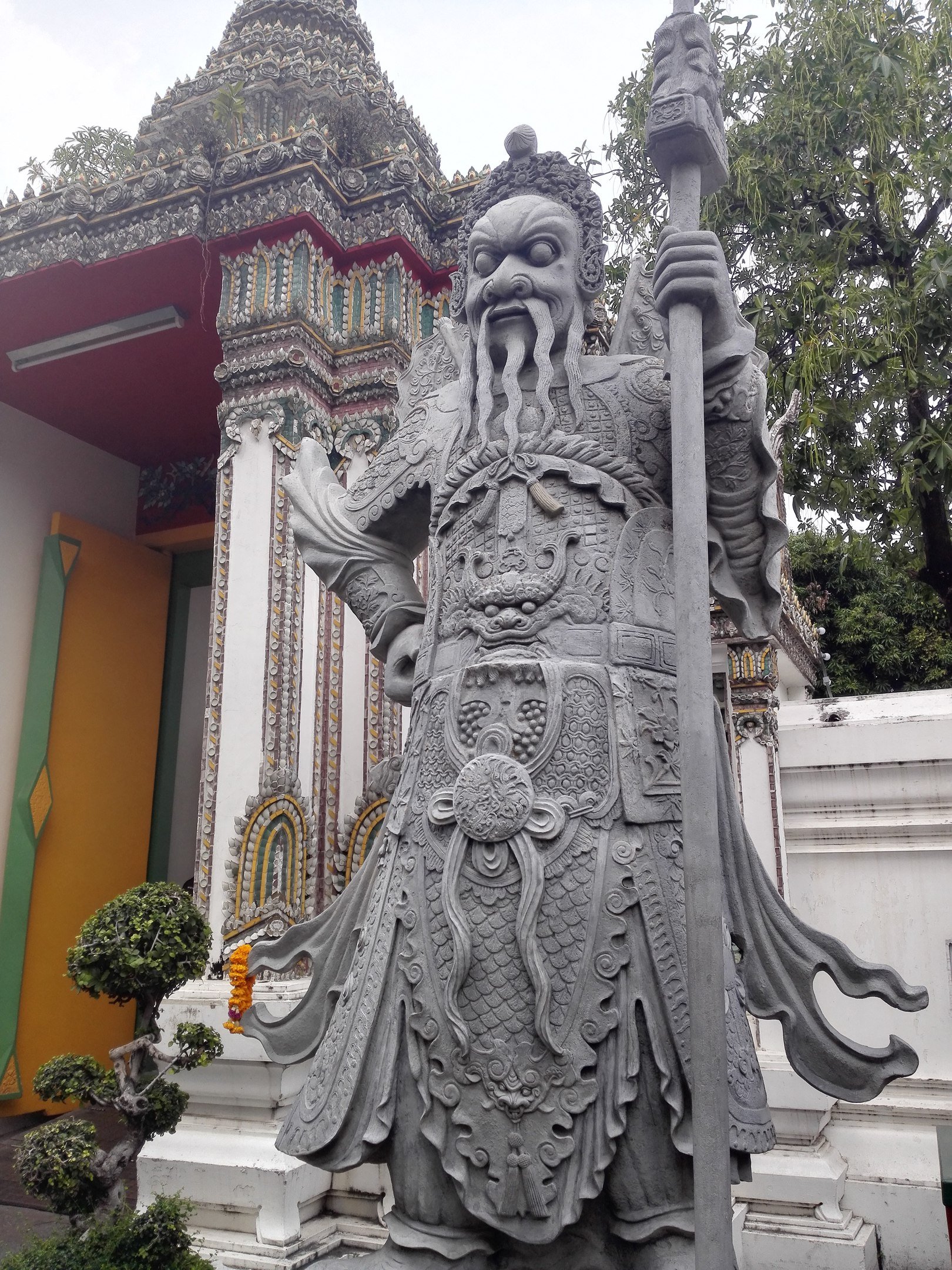
After a shower we headed to the part of the city with the temples and museums. First was the Temple of the Reclining Buddha, Wat Pho. It is one of the oldest temples in Bangkok: it stood here even before the city became the capital, and the reclining Buddha itself is 46 meters long. At the entrances and arches the temple is guarded by stone statues brought from China — they were carried on trading ships as ballast.
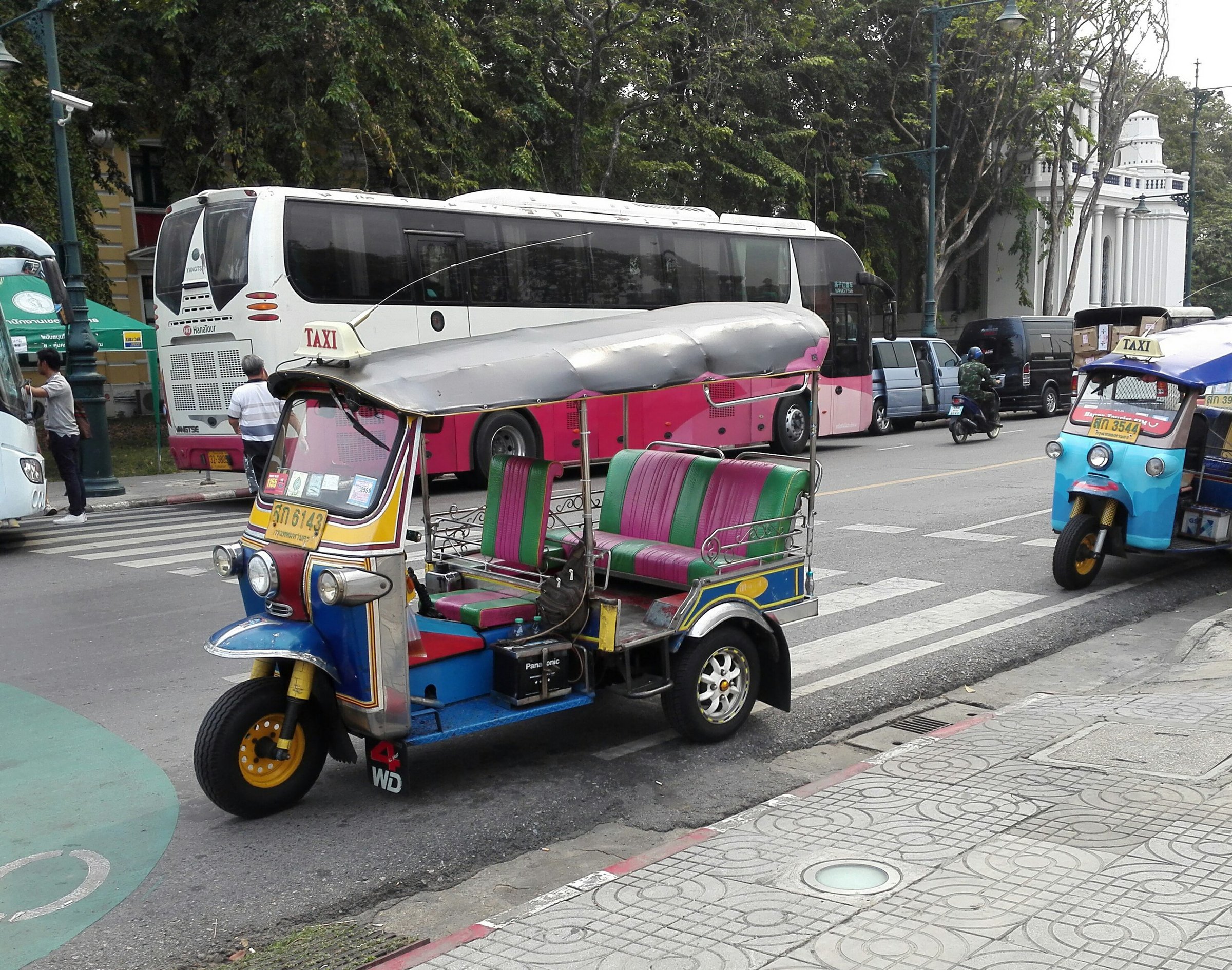
We couldn't resist taking a picture of a tuk-tuk: the Bangkok one is a little different from the Indian one.
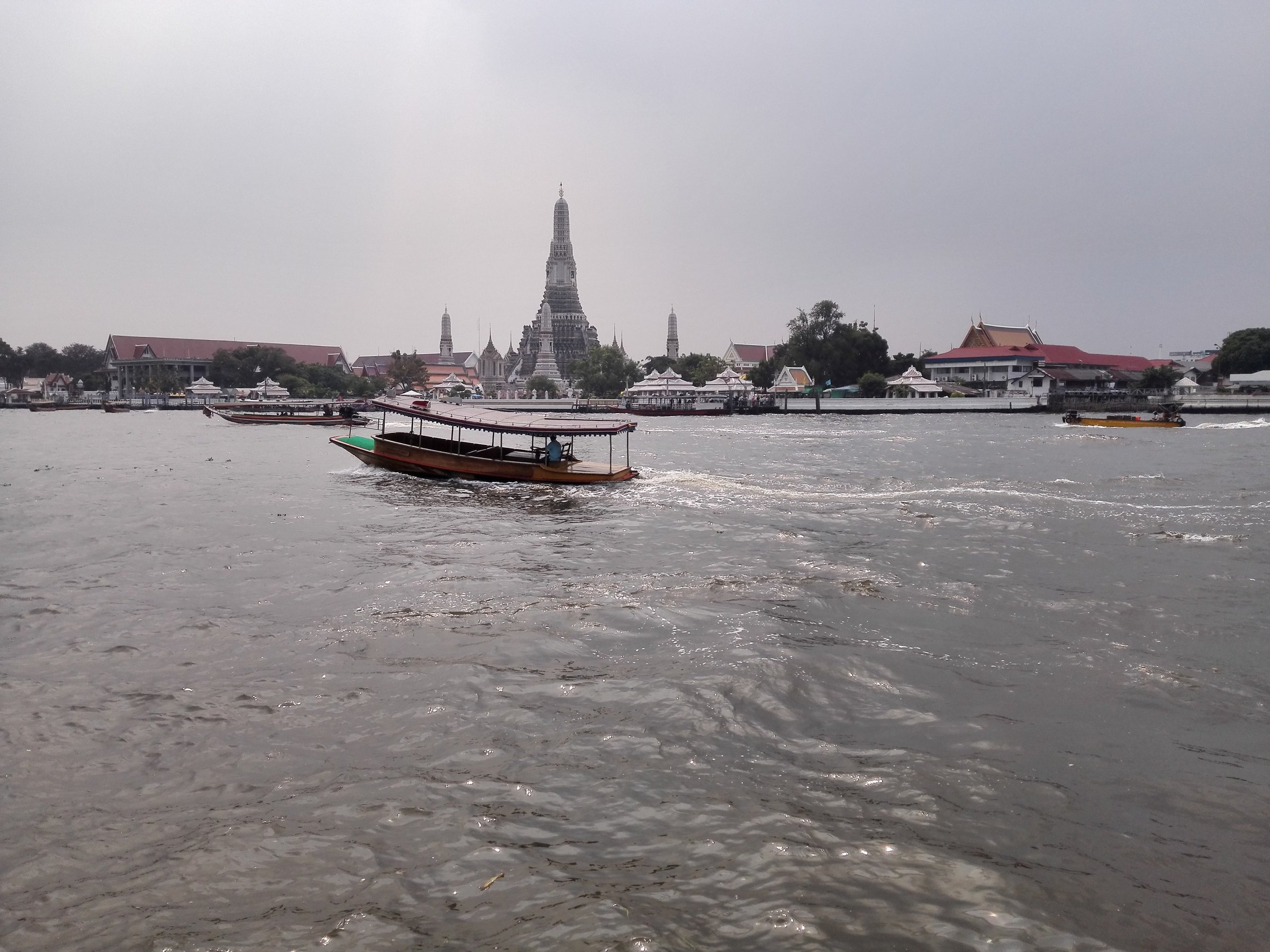
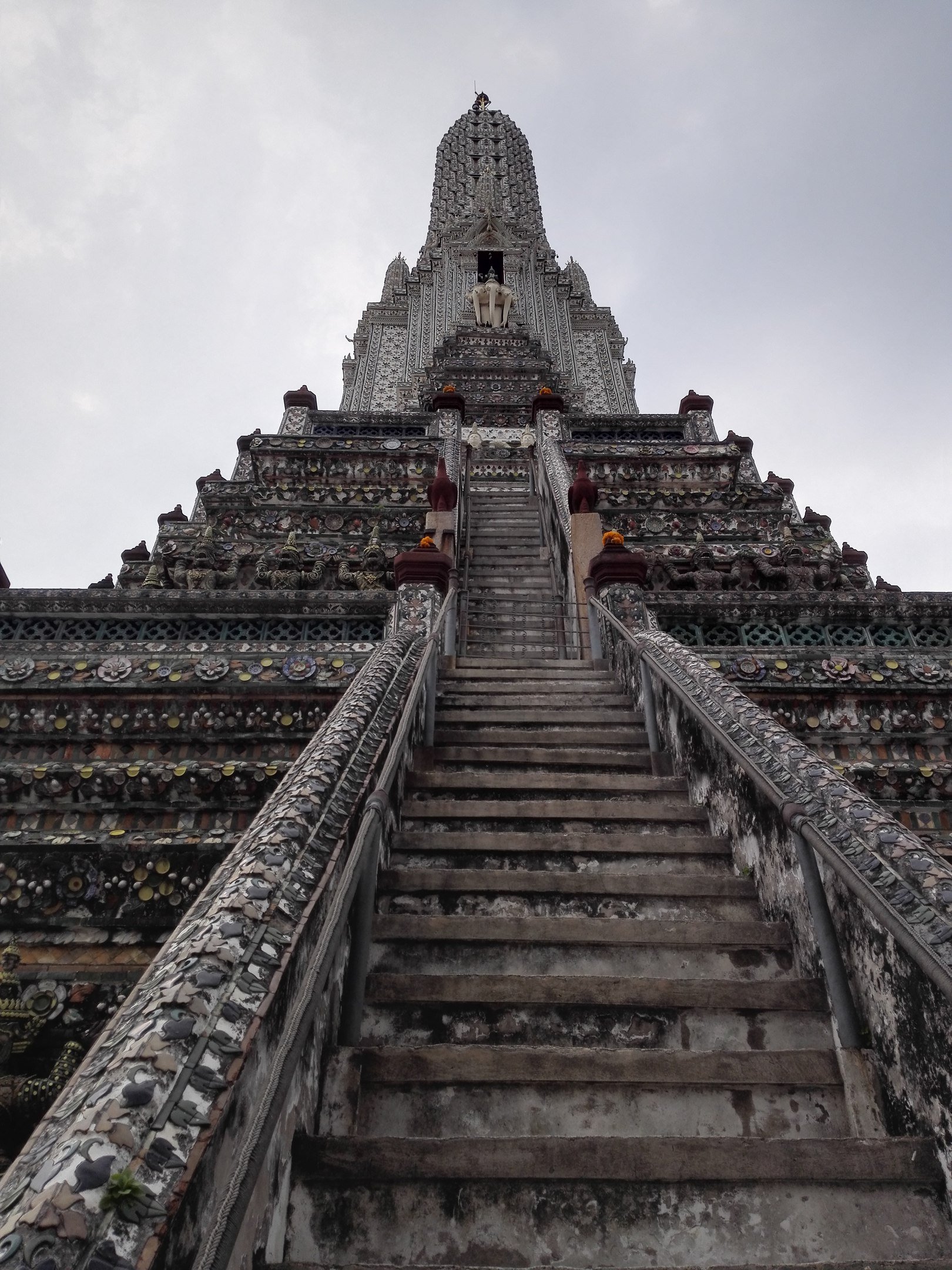
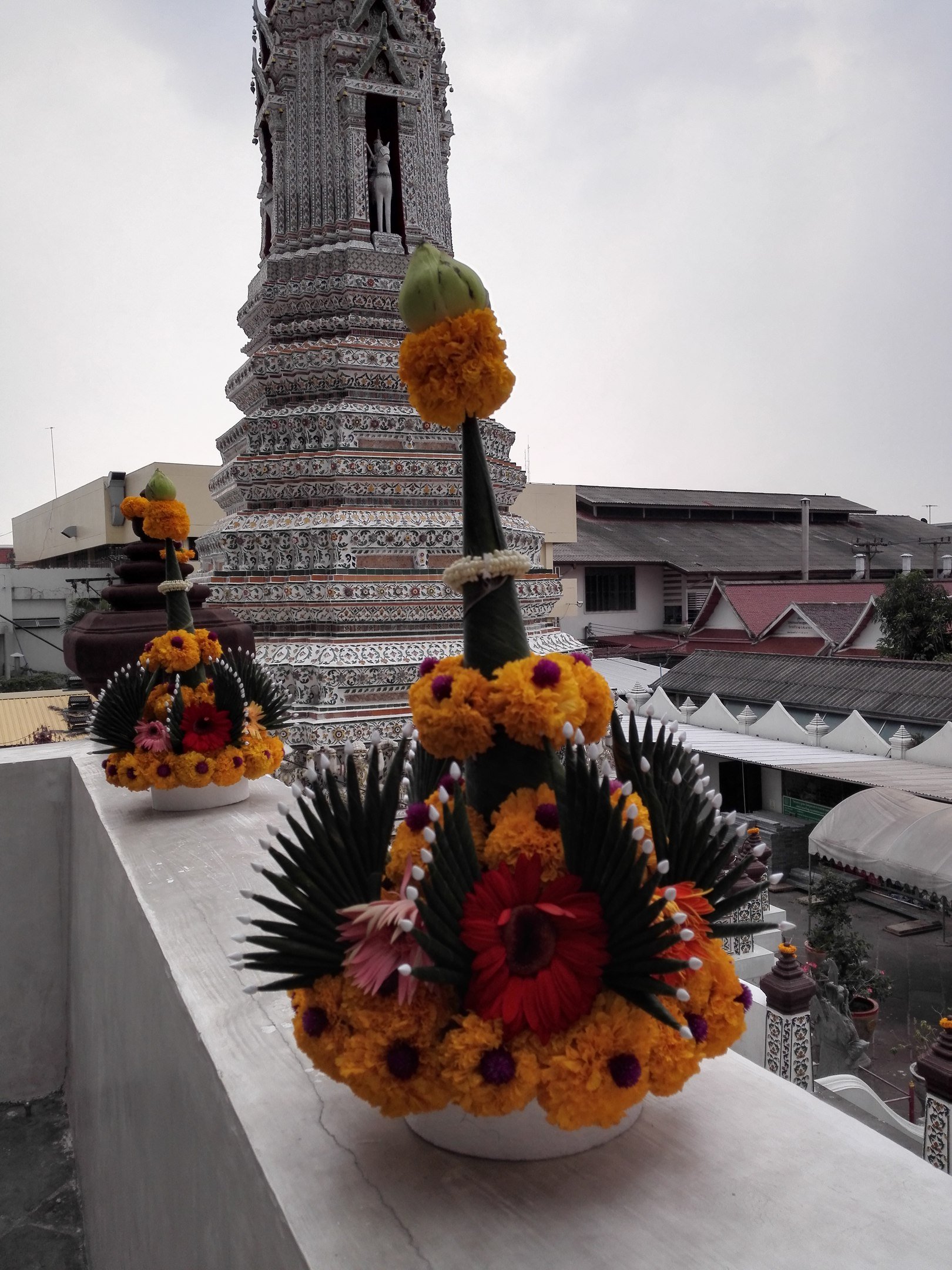
To get to the next temple, Wat Arun, we had to take a boat: it is on the other bank of the Chao Phraya River. Flower arrangements like these are offered to the Buddha.
Museum Siam
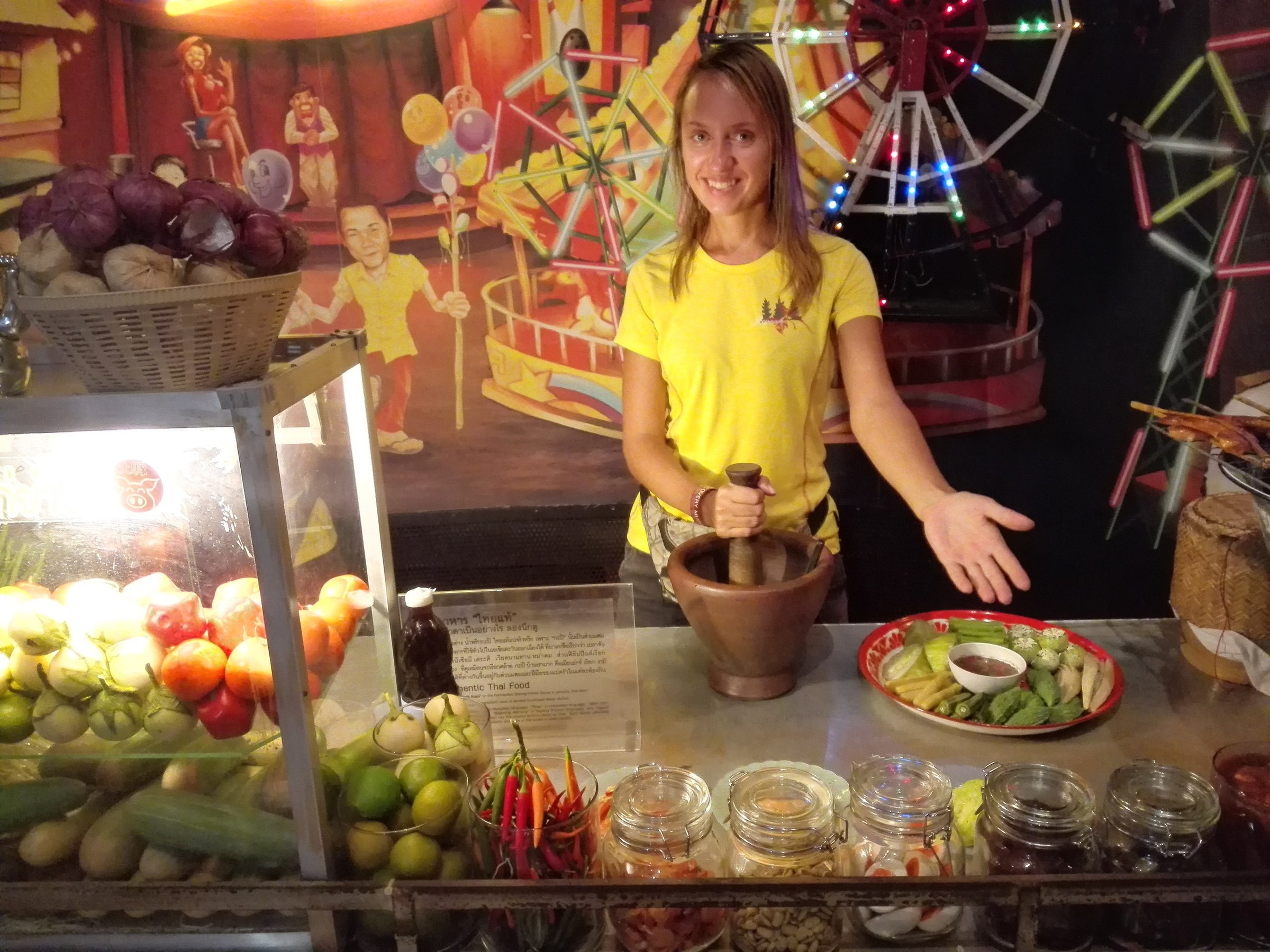
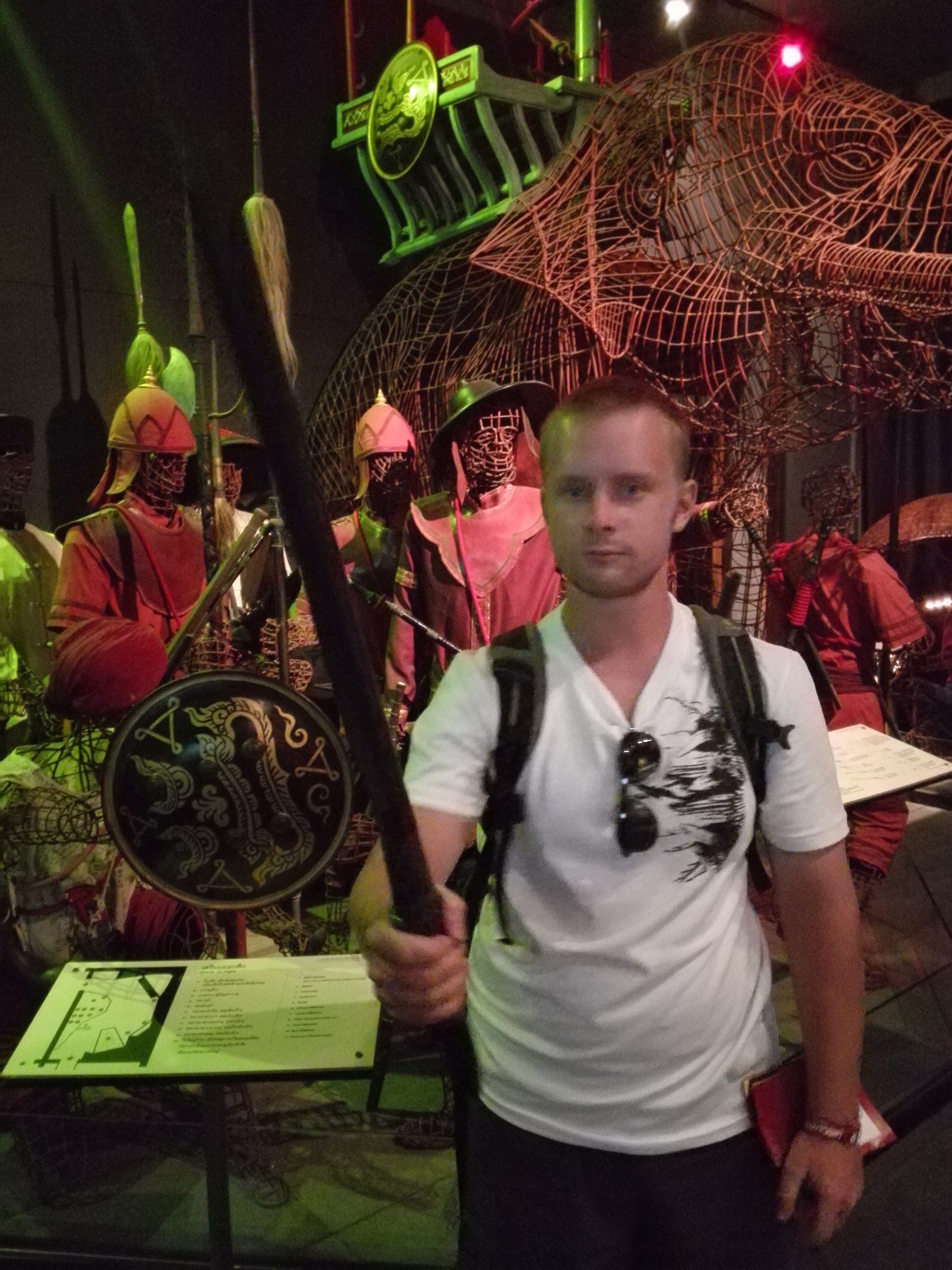
Then we went to Museum Siam — it turned out that after four o'clock admission is free. The museum is about the Thai people, their culture and history, with all kinds of installations. There is a fruit vendor there too — fruit is still sold here today, only from carts. Old vessels and tools, an ingot and ore, Siamese boats and ships, military installations. The last halls are about how Western civilization began to make its way into the country: a car, a jukebox.
We played in the installations ourselves too. Alexandra got to be a tuk-tuk driver, a vendor at a street food stall, a news anchor, and a bartender, and Pavel stood with a club among the warriors and learned to fire a cannon.
The subway, the Skytrain, and an airport-themed mall
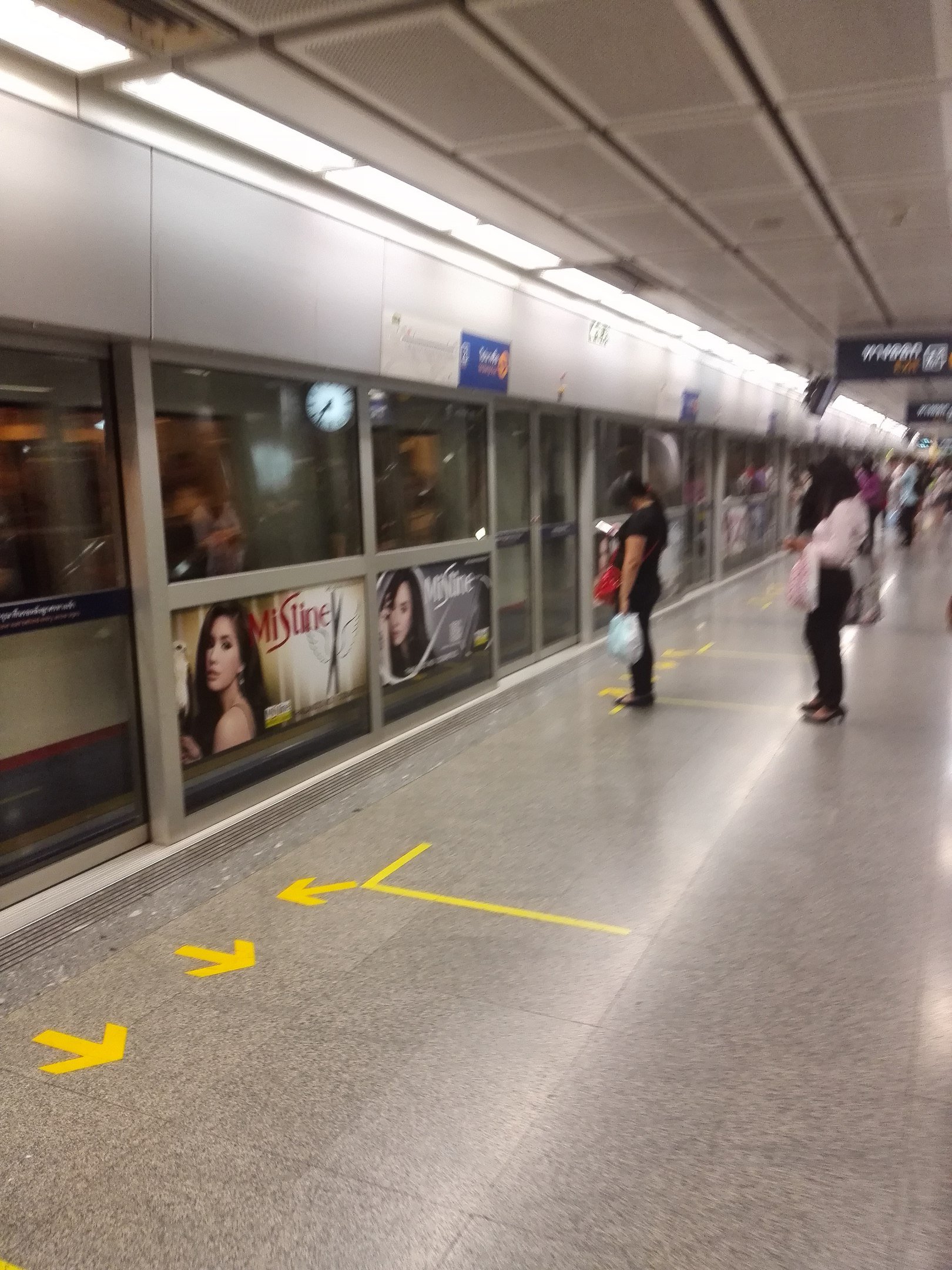
On January 8 we spent the whole day walking around the modern part of Bangkok. We sat in a park — there are a lot of parks here. We rode the subway: everything is very safe here, you couldn't fall onto the tracks even if you wanted to — they are separated by a wall whose doors open at the same time as the doors of the arriving train. In the car you have to give up your seat not only to pregnant women, the elderly and people with disabilities, but also to monks.
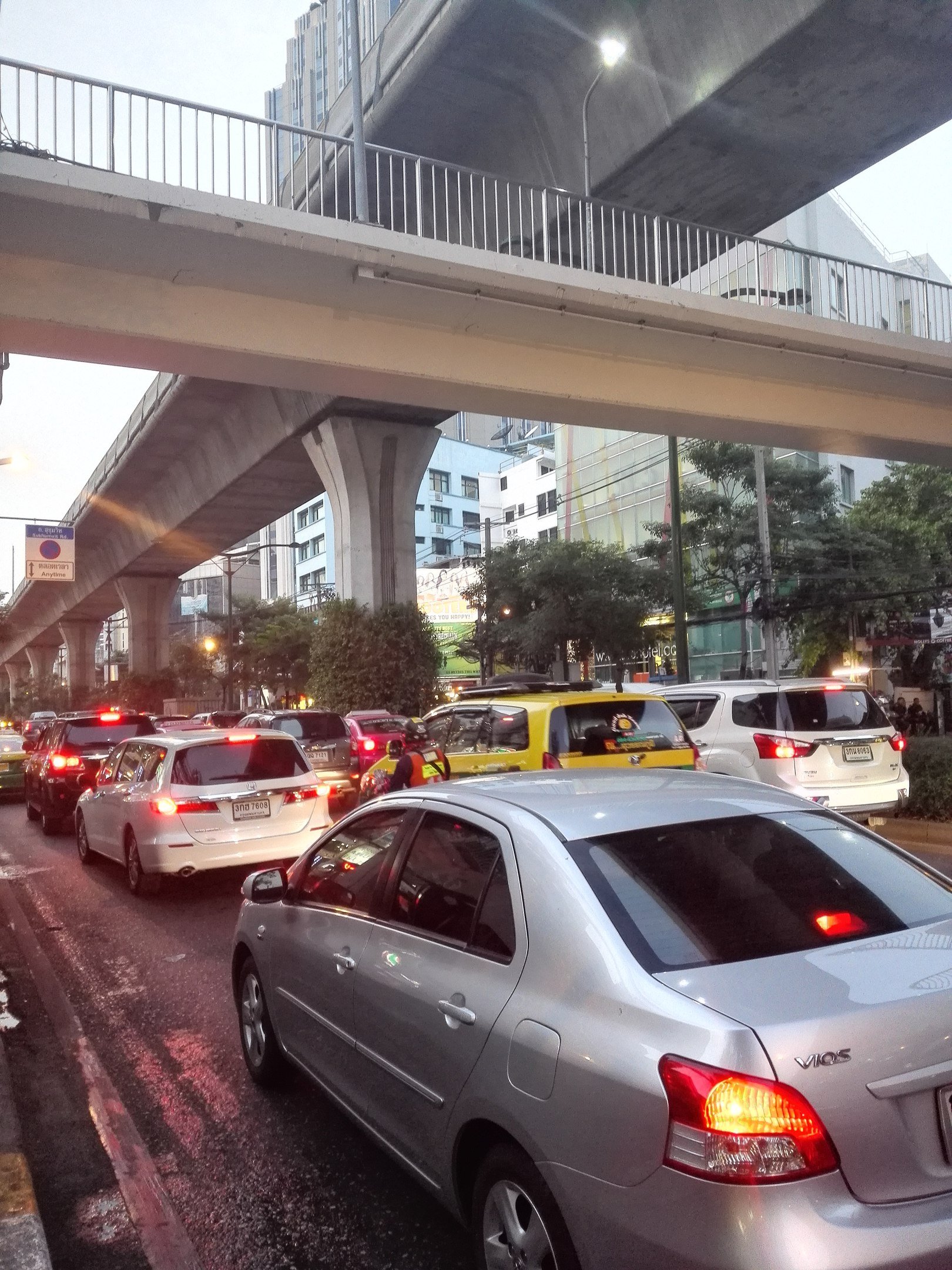
We also rode the Skytrain, an elevated train: the same subway, only above ground. Its tracks run right over Bangkok's traffic jams.
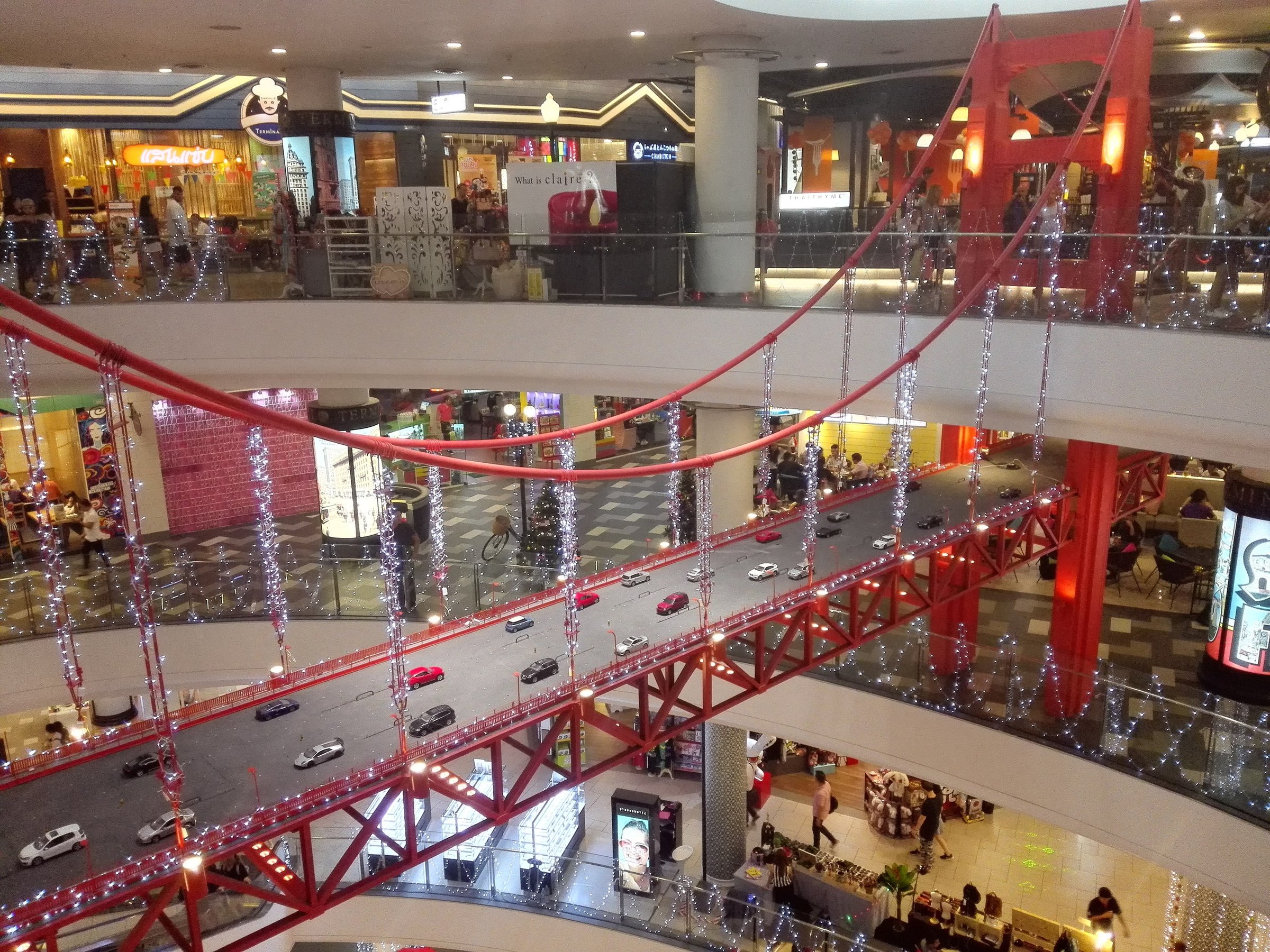
We also stopped by Terminal 21, a fun mall designed like an airport: its halls are decorated as different countries, and even the restrooms are all themed and all different — one looks like a stove, one has a fishing theme, one is like a marble palace hall.
From downtown we went home on a commuter boat. We walked along Khao San Road — it is like Bangla Road in Phuket, only everything here is more decent, more like an ordinary night market. And on the way home we watched graffiti being painted on a wall.
The city from the 84th floor
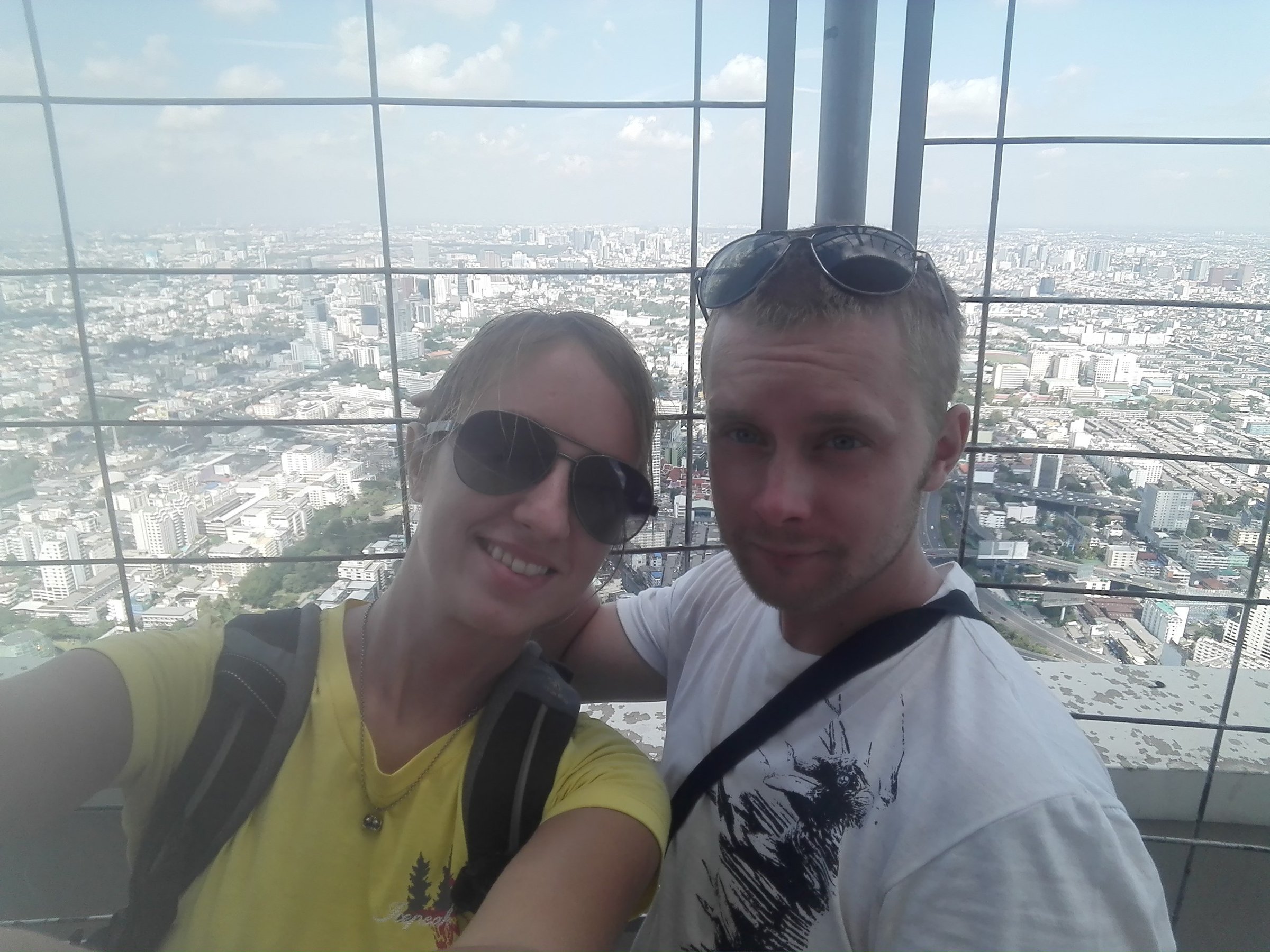
On January 9 we went out together with two guys who were also staying with our host. We went up to the 84th floor of the Baiyoke Sky skyscraper — there is an open revolving deck there at a height of 309 meters. From above you see Bangkok's complicated interchanges.
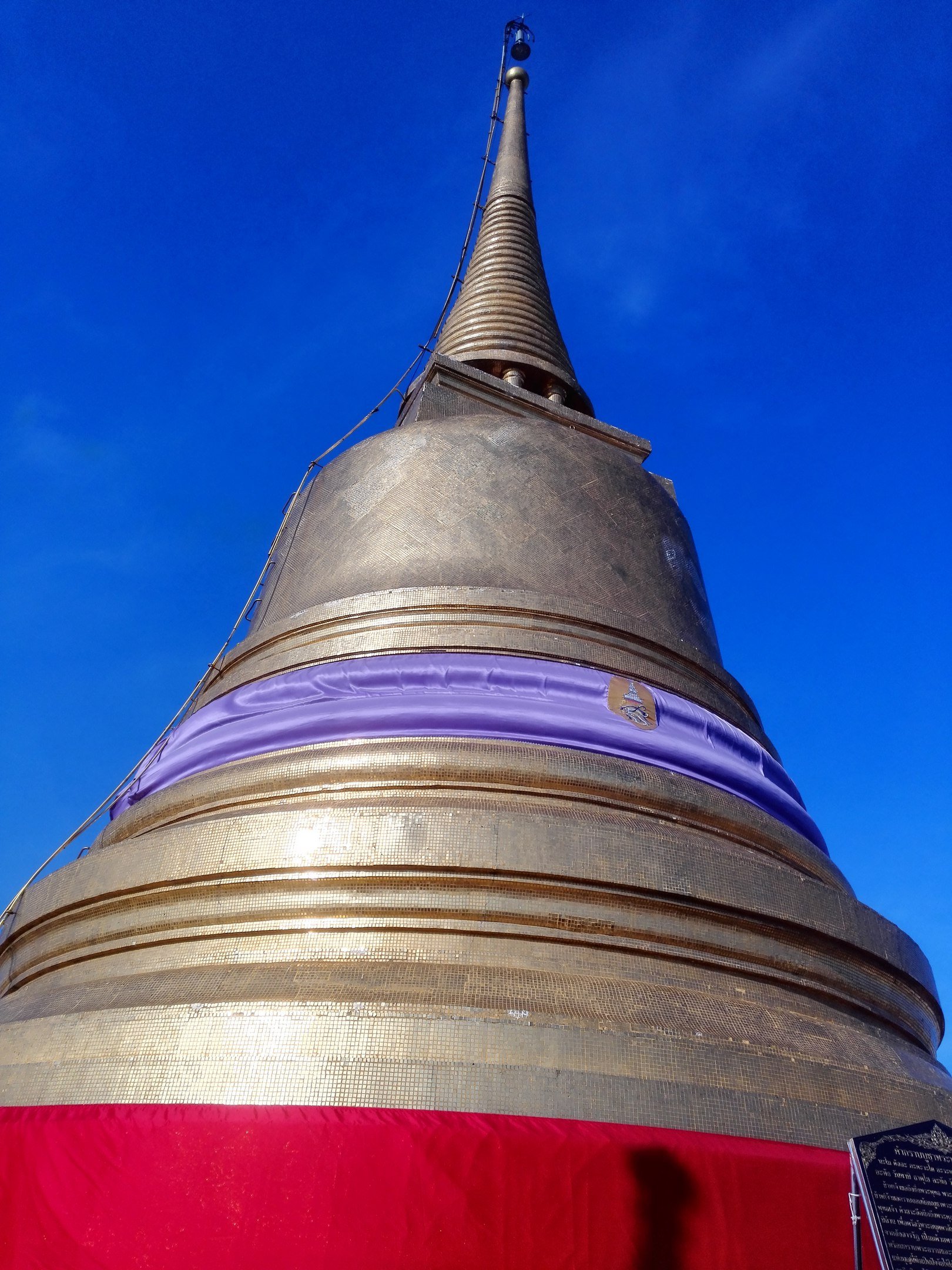
Then we stopped by one more temple, took the commuter boat again, this time in the daytime, and climbed the Golden Mount to the golden stupa. The mount is actually man-made: at one time a huge stupa was started here, but Bangkok's soft ground couldn't hold it, and over time the abandoned construction site came to look like a real hill. Later a small stupa was put on top of it and covered in gold. We also went to the waterfront with a view of a beautiful bridge.
On January 10 at eight in the morning a bus took us to Siem Reap — Cambodia lay ahead.
Comments
Thank you! Your comment has been sent and will appear after moderation.