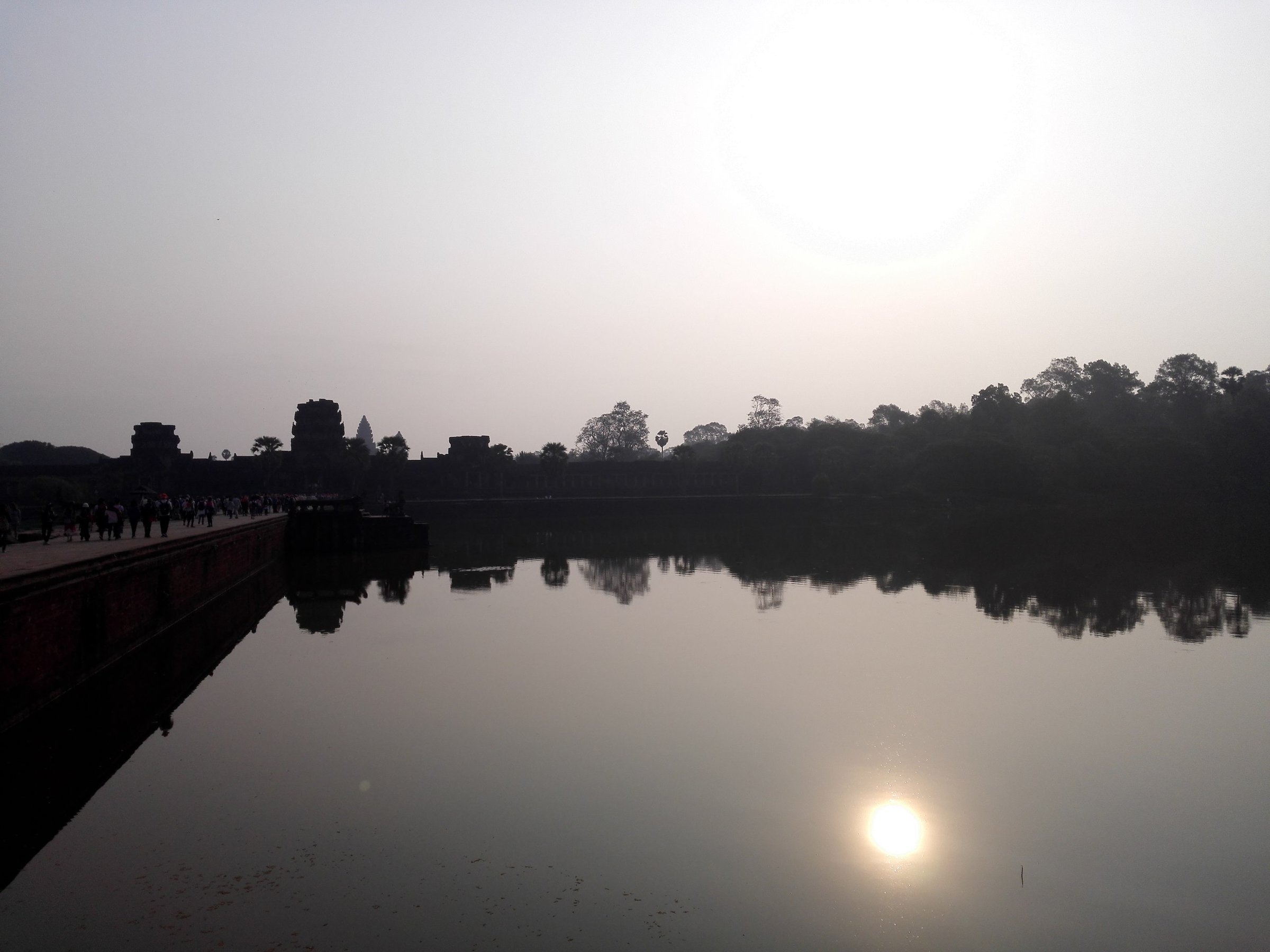
Angkor without a sunrise
In August 2015 we had already made it to the Cambodian border, but with a scooter on Thai plates we were not let in — that is the story of the post “320 kilometers to turn around at the Cambodian border.” We got here later, after we sold the scooter in Phuket: we entered Cambodia by bus and rode on to Siem Reap, the town next to the temples of Angkor.
On January 14, 2016, we rented bicycles. From our guesthouse to Angkor it was about fifteen minutes, so a bicycle is just the thing for getting there; bicycles are quite popular here in general.
To be honest, Angkor did not impress us much. Perhaps it was our inflated expectations. But the countless crowds of tourists kept us from feeling the ancient Khmer atmosphere — the place is simply too hyped.
The sunrise we missed
On January 15 we woke up at five in the morning and set off at six, hoping to catch the sunrise at Angkor. We didn't make it: by the time we got there, it was already light.
In 2016 a one-day ticket cost 20 dollars per person; there are also three-day and seven-day tickets. We handed over the money through gritted teeth. It's all serious: the ticket has the holder's photo on it.
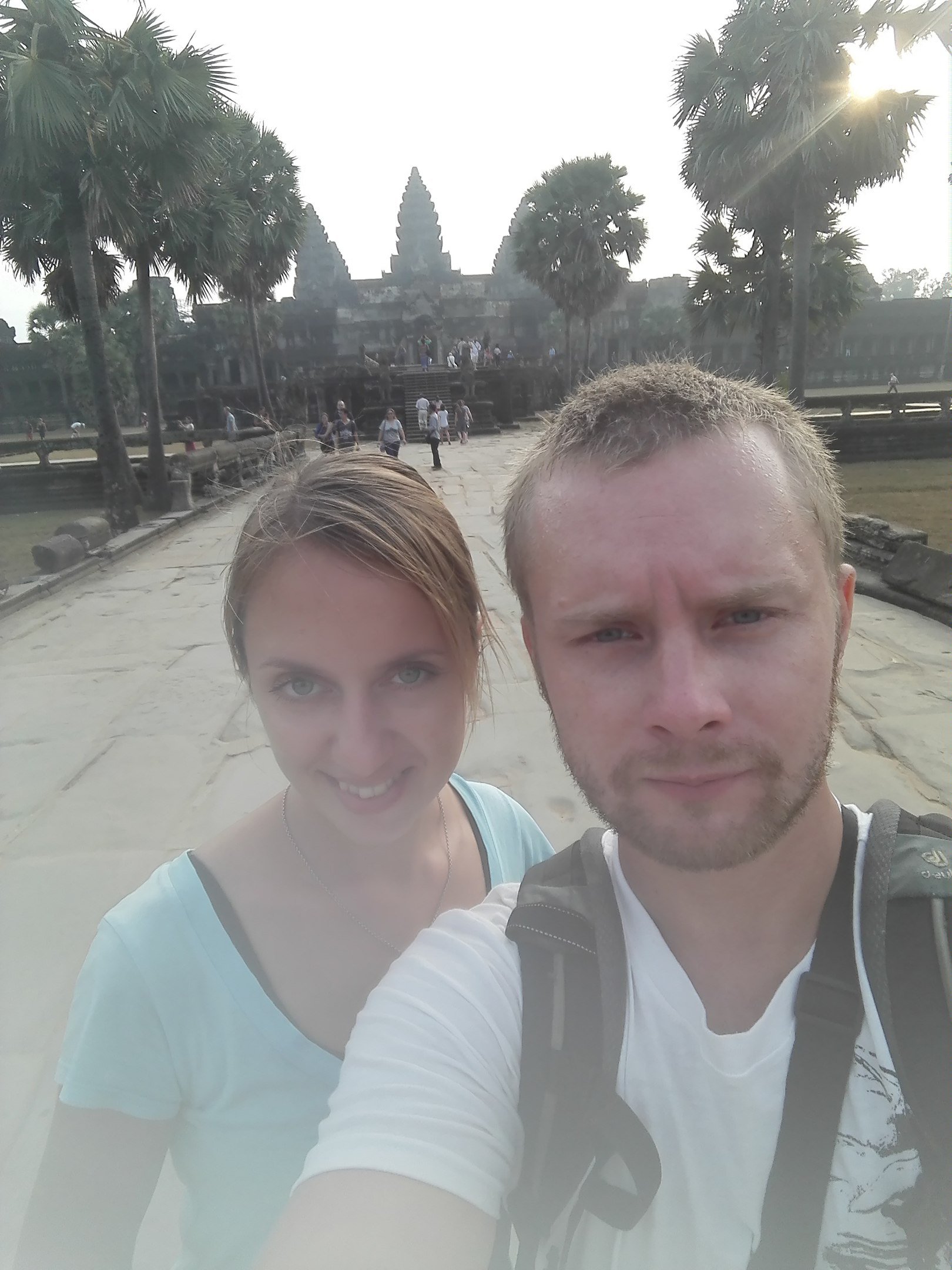
The main temple here is Angkor Wat. There are a great many temples in Angkor, and this one is the chief of them.
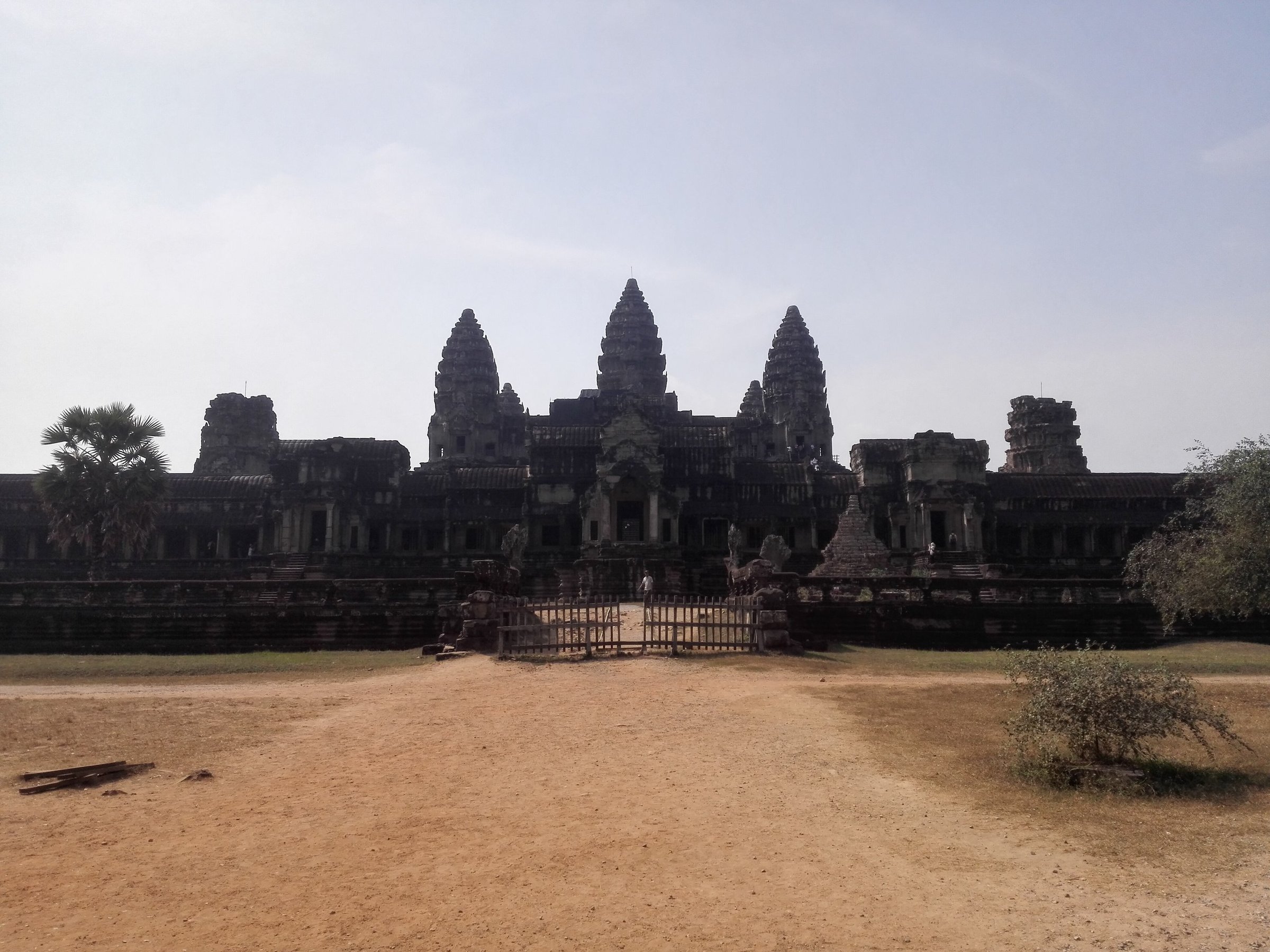
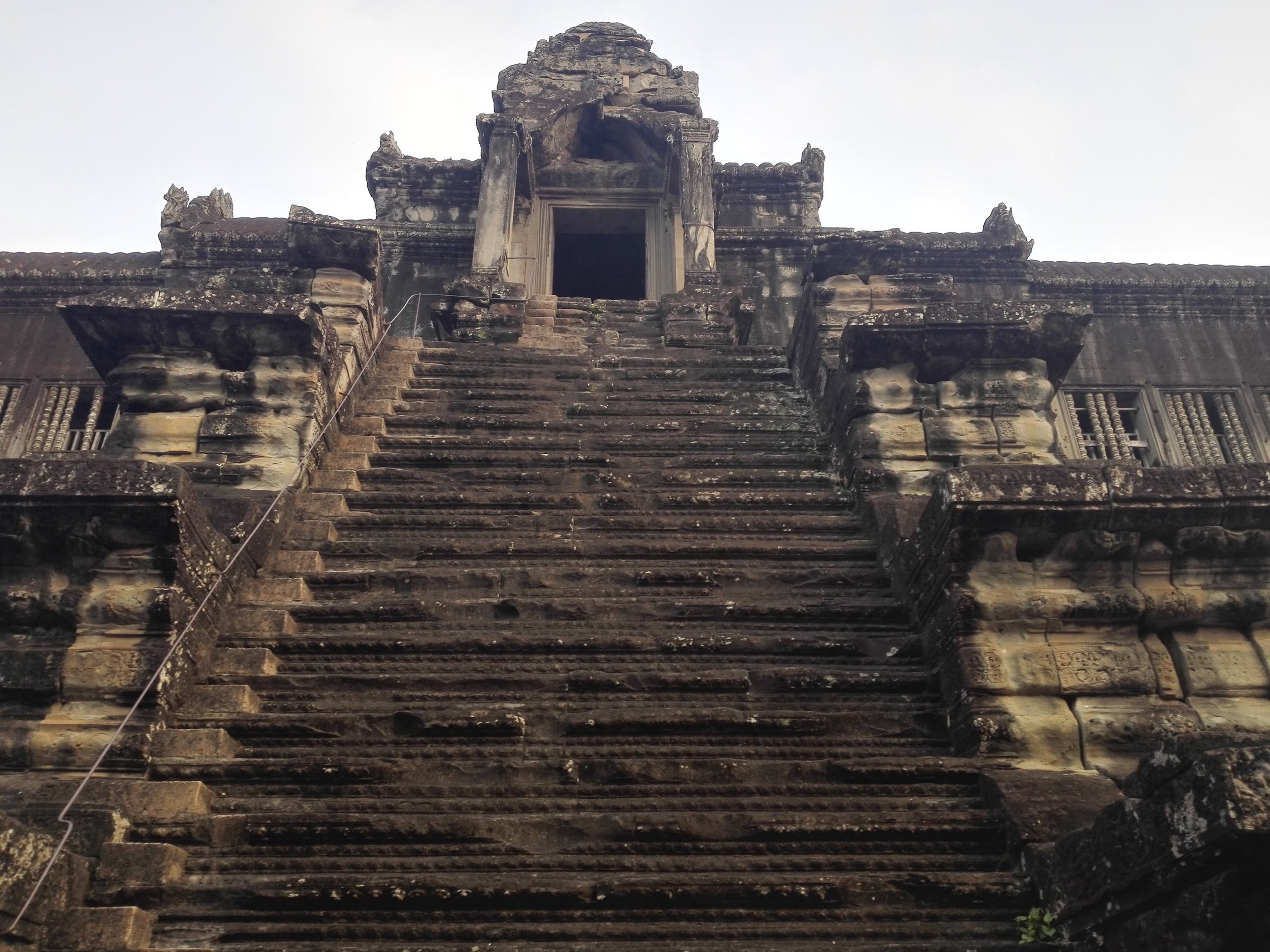
Angkor Wat is ringed by corridors, and steep steps lead to the top. The temple has several pools — there are even a couple at the very top.
The faces of Bayon
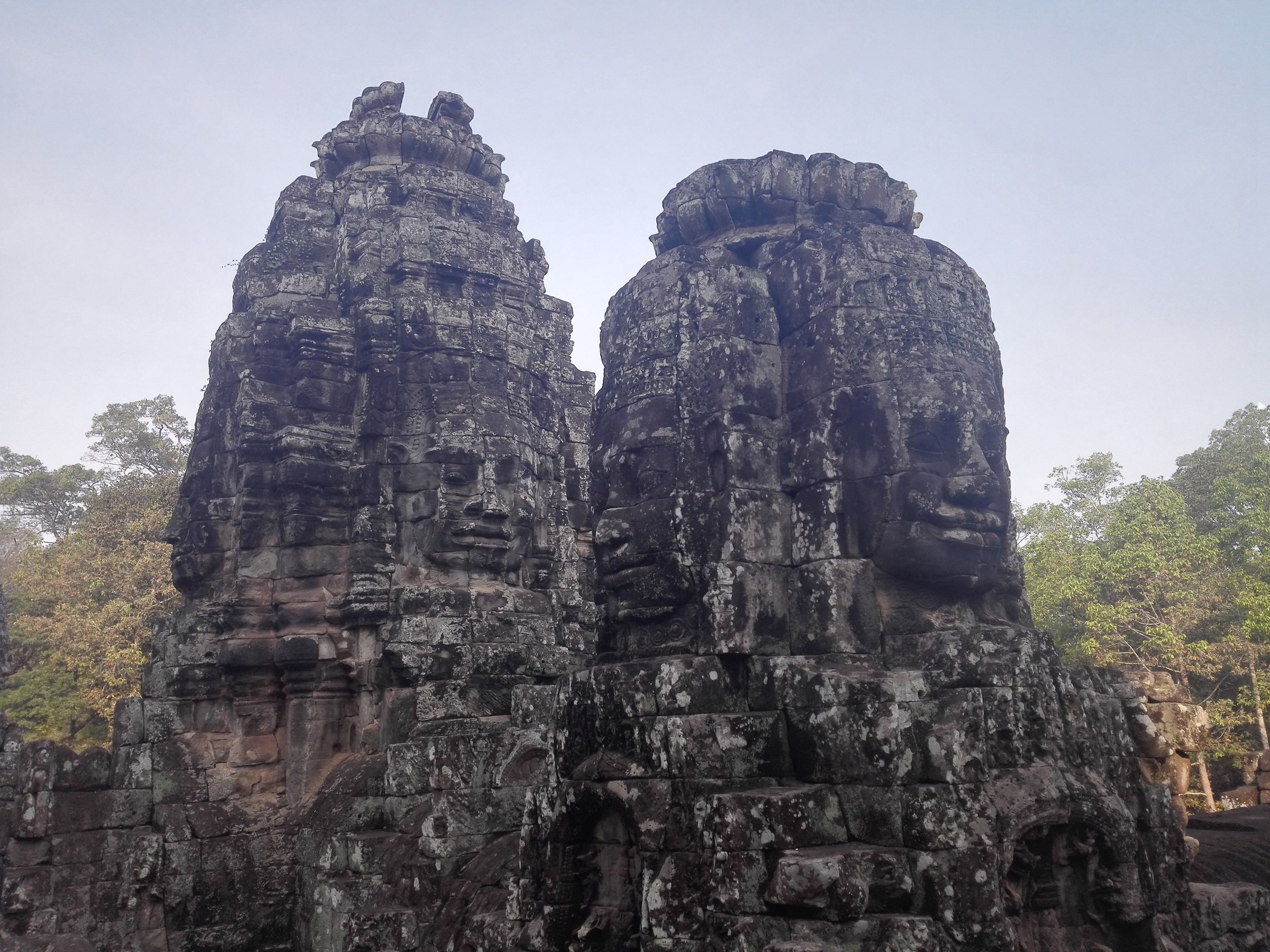
Next came Bayon, a temple with huge stone faces everywhere. At the time we took them for faces of the Buddha, but they are most often thought to depict King Jayavarman VII, under whom the temple was built. There were so many Chinese tourists that you could hardly move.
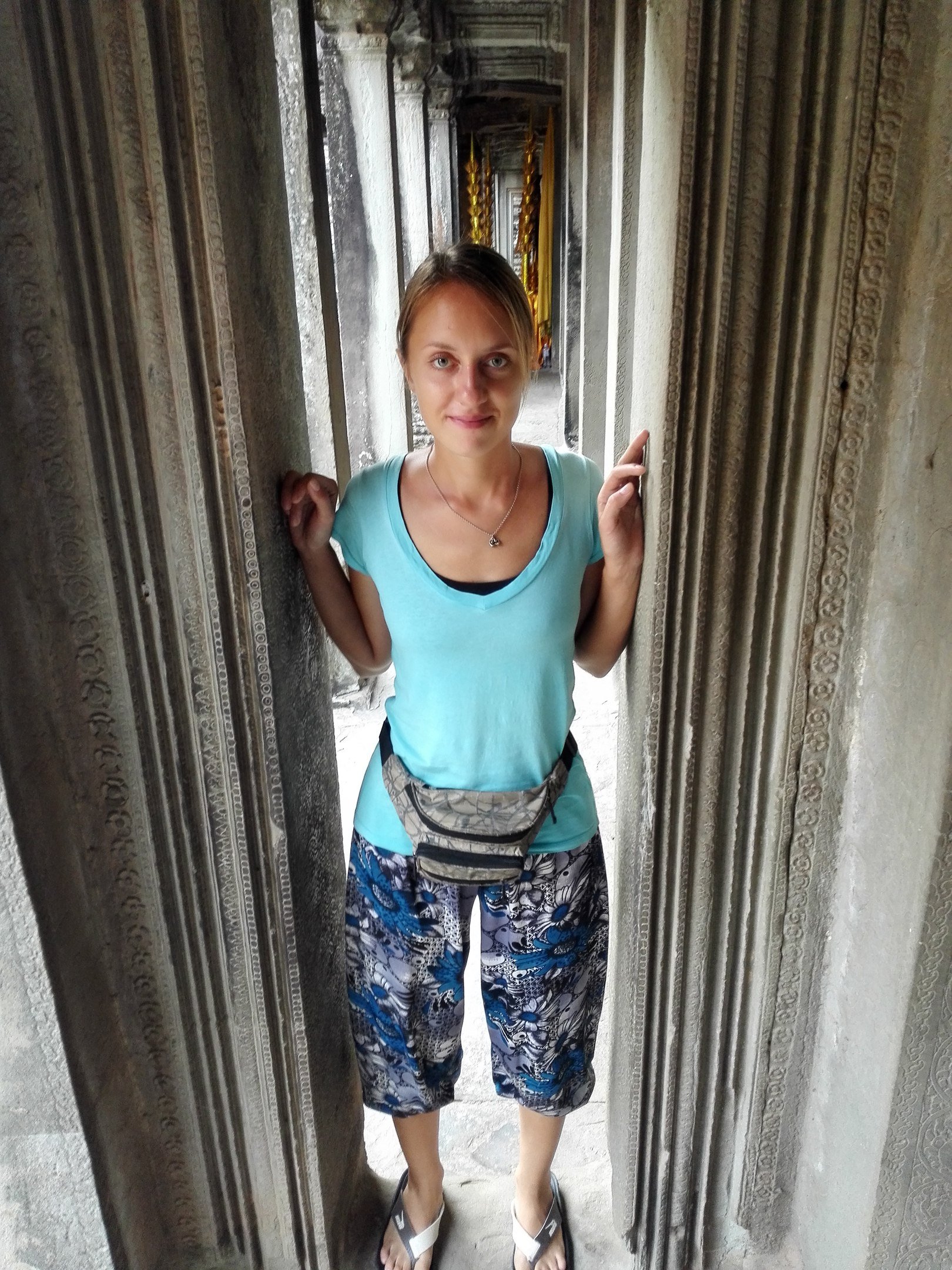
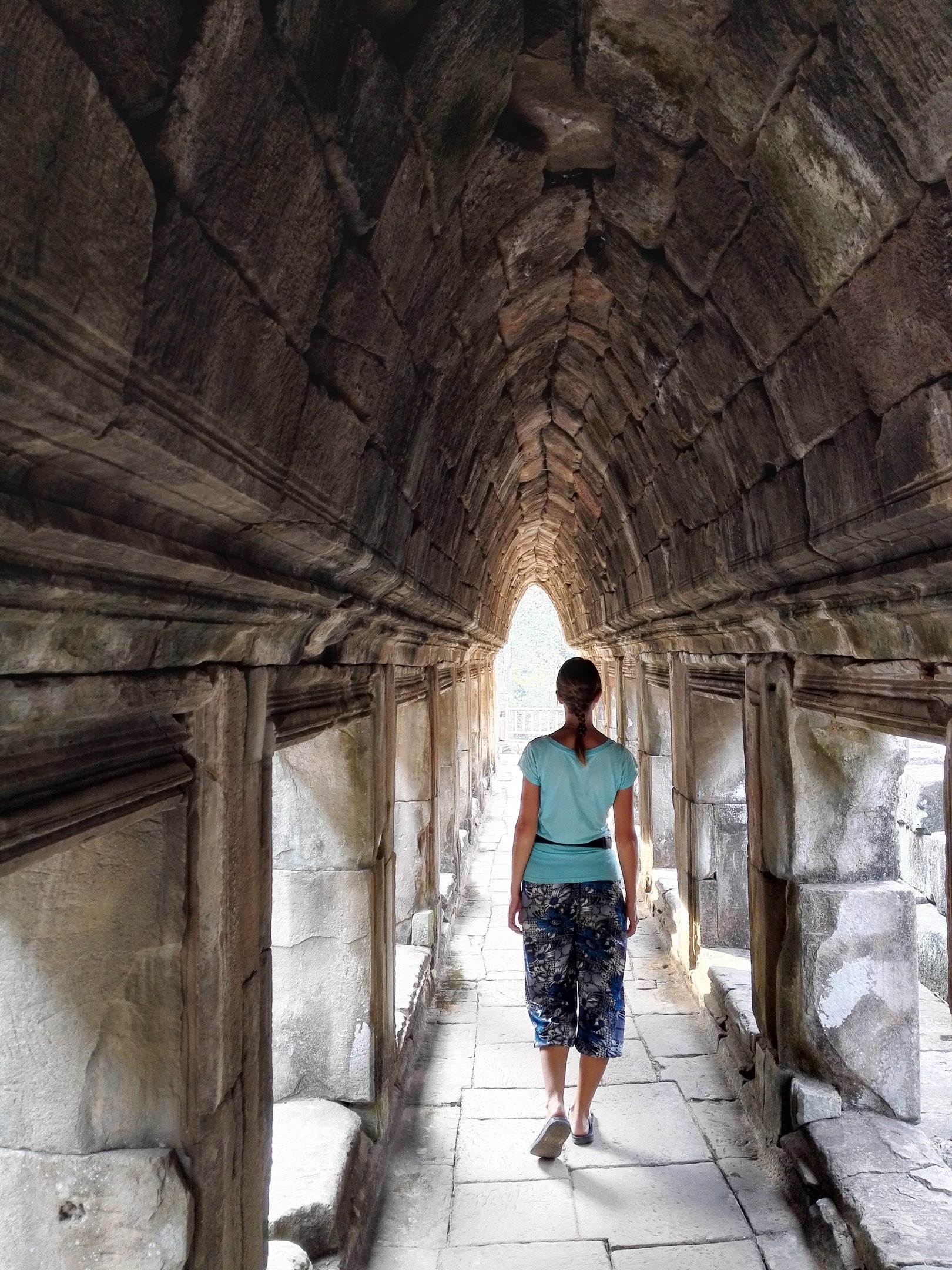
Nearby is Baphuon with its long corridors. It is also part of the Angkor Thom temple complex, and from its top you can see the surrounding area.
Nature reclaims its own
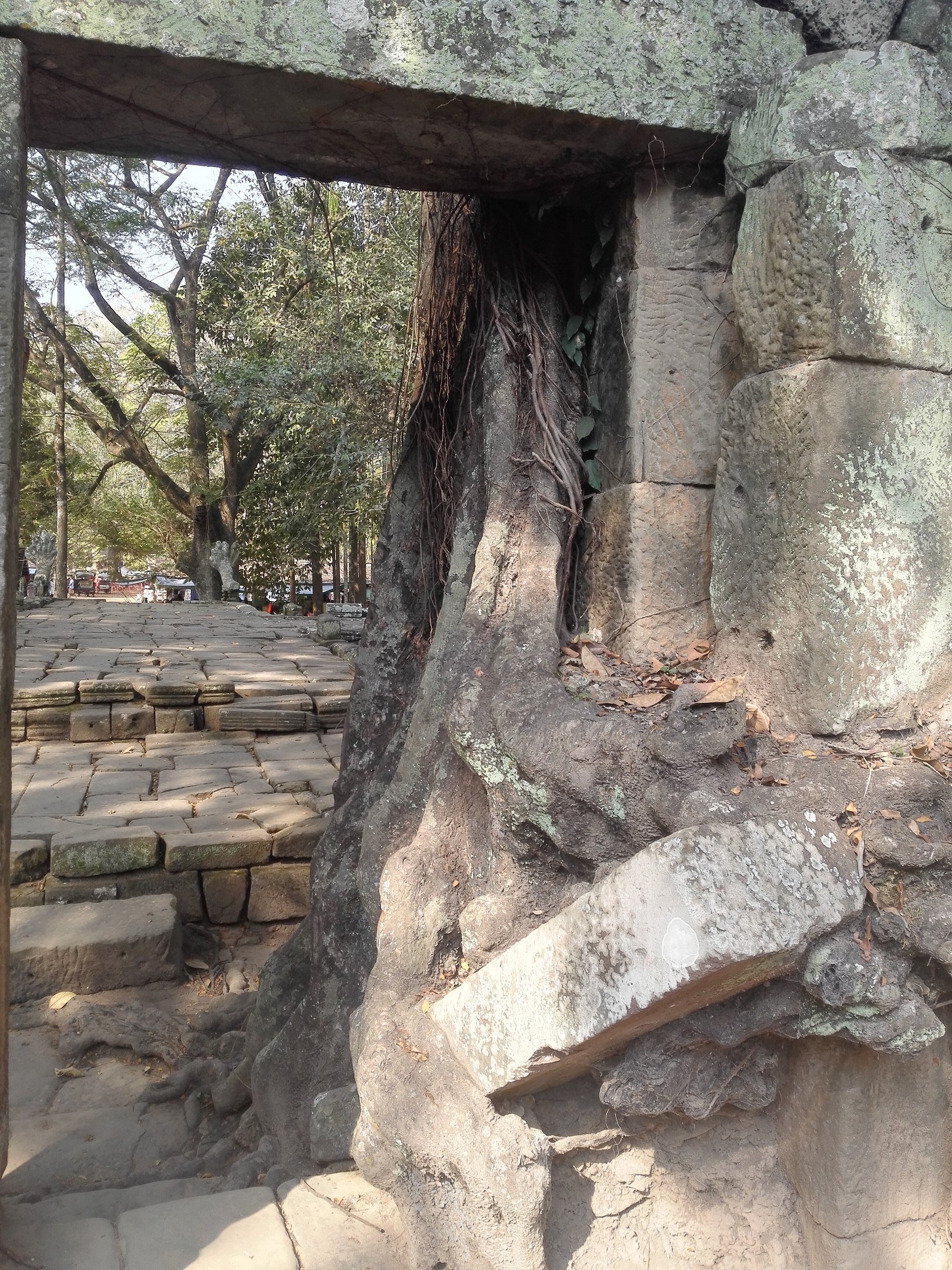
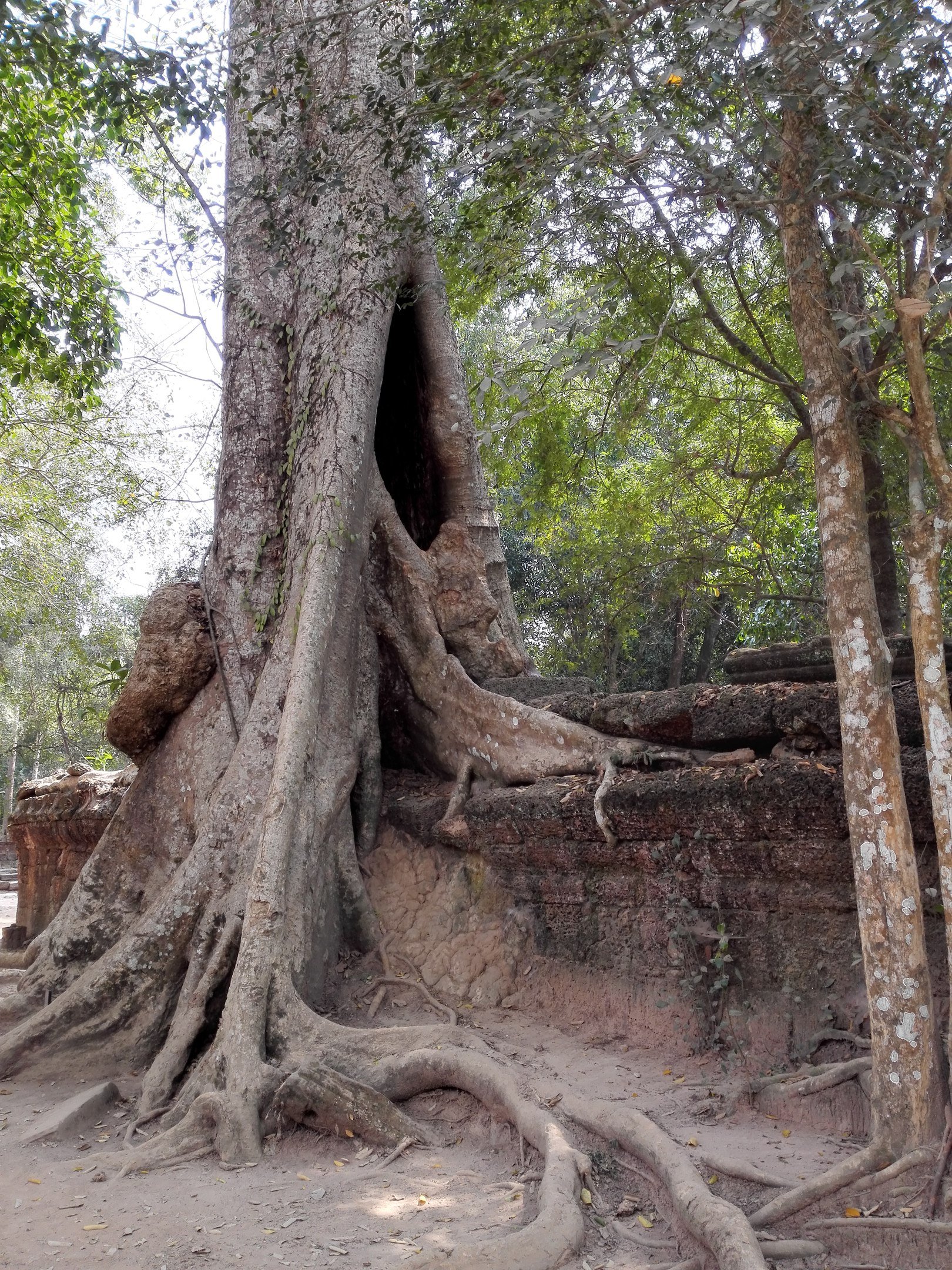
There are many small temples around, and by and large they are all alike. But in them you can see how the jungle is taking back its own: a tree seems to be devouring a temple gate, and roots spread across the old stones.
A sunset in the clouds
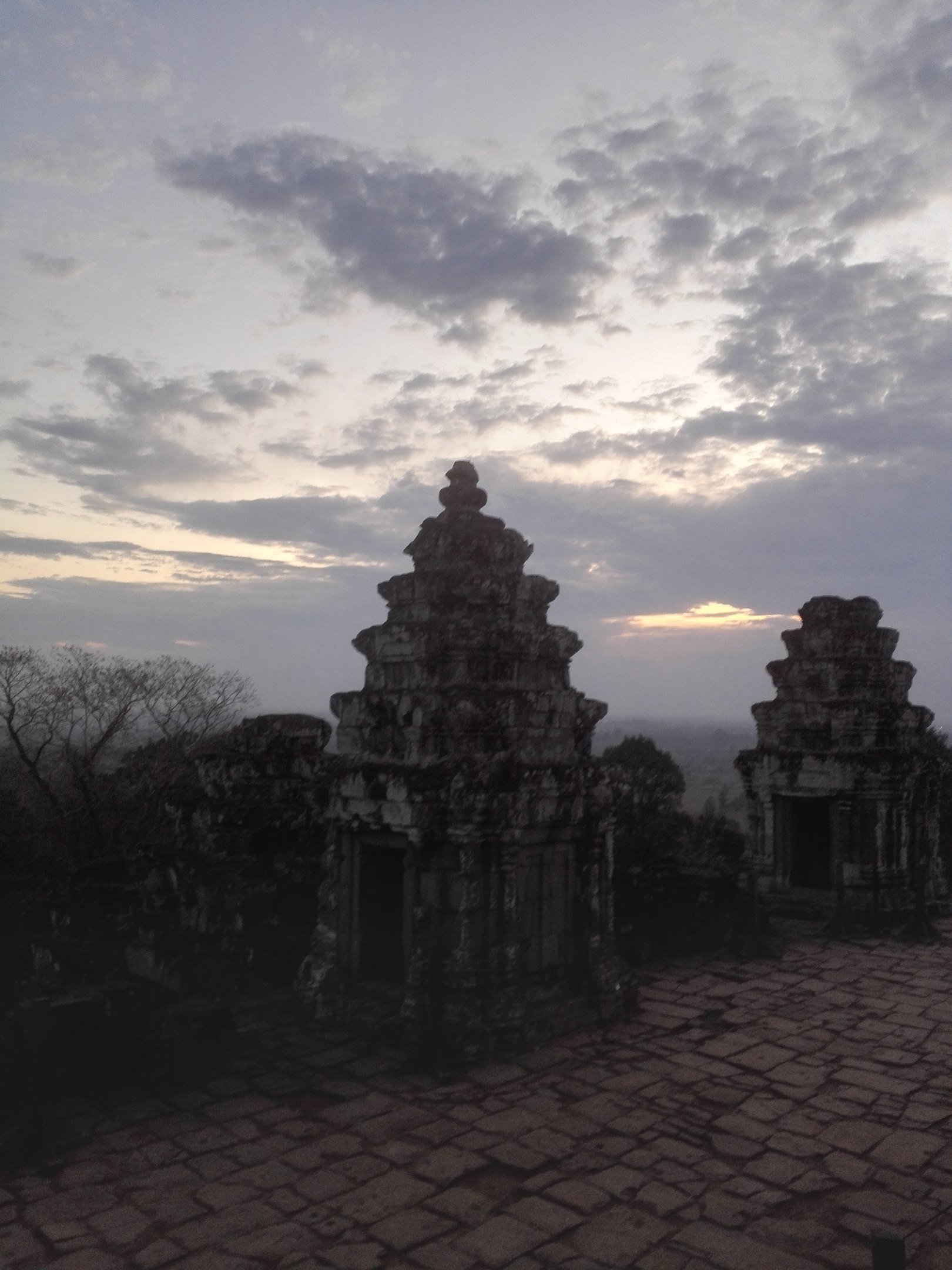
On the evening of January 16 we went to Angkor again, to watch the sunset at the ruins of a temple on a hill. But it was cloudy, and we never did see a beautiful sunset.
Siem Reap
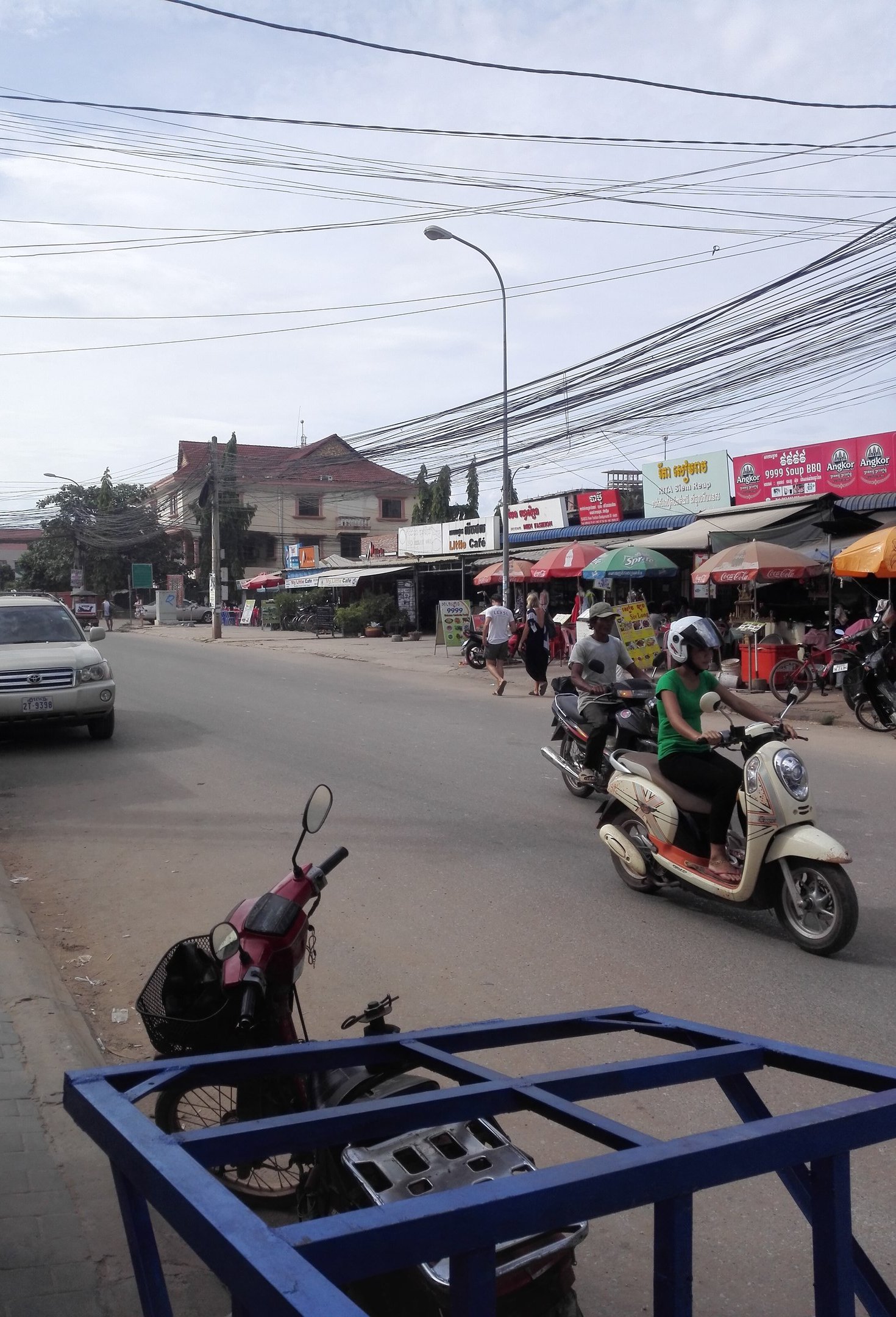
Finally, the town itself. The street in the photo is one of the more or less clean ones; in general, Siem Reap is very dusty.
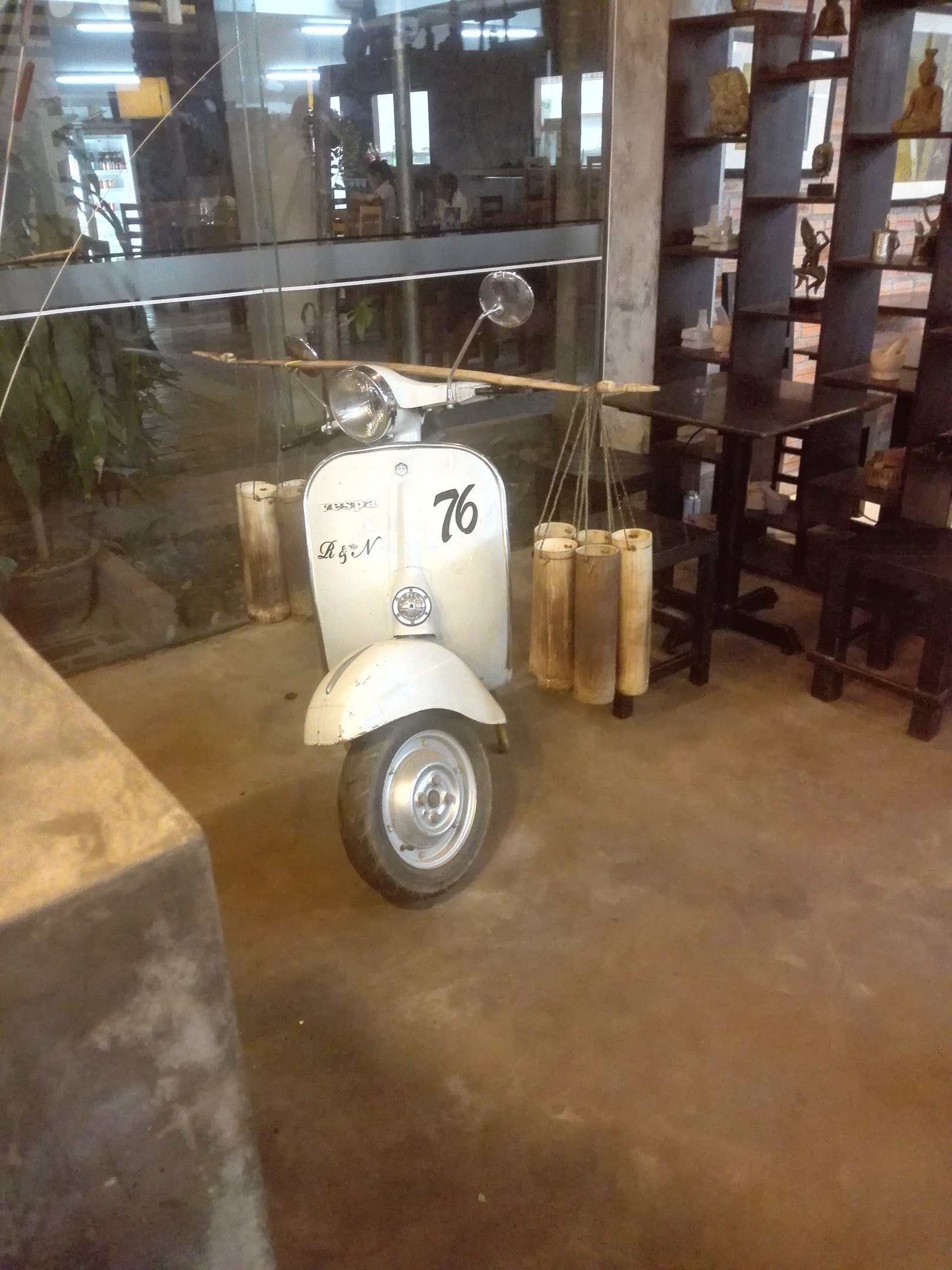
And in bamboo tubes like these, palm juice is sold on the streets.
On the morning of January 18 we left for Phnom Penh.
Comments
Thank you! Your comment has been sent and will appear after moderation.