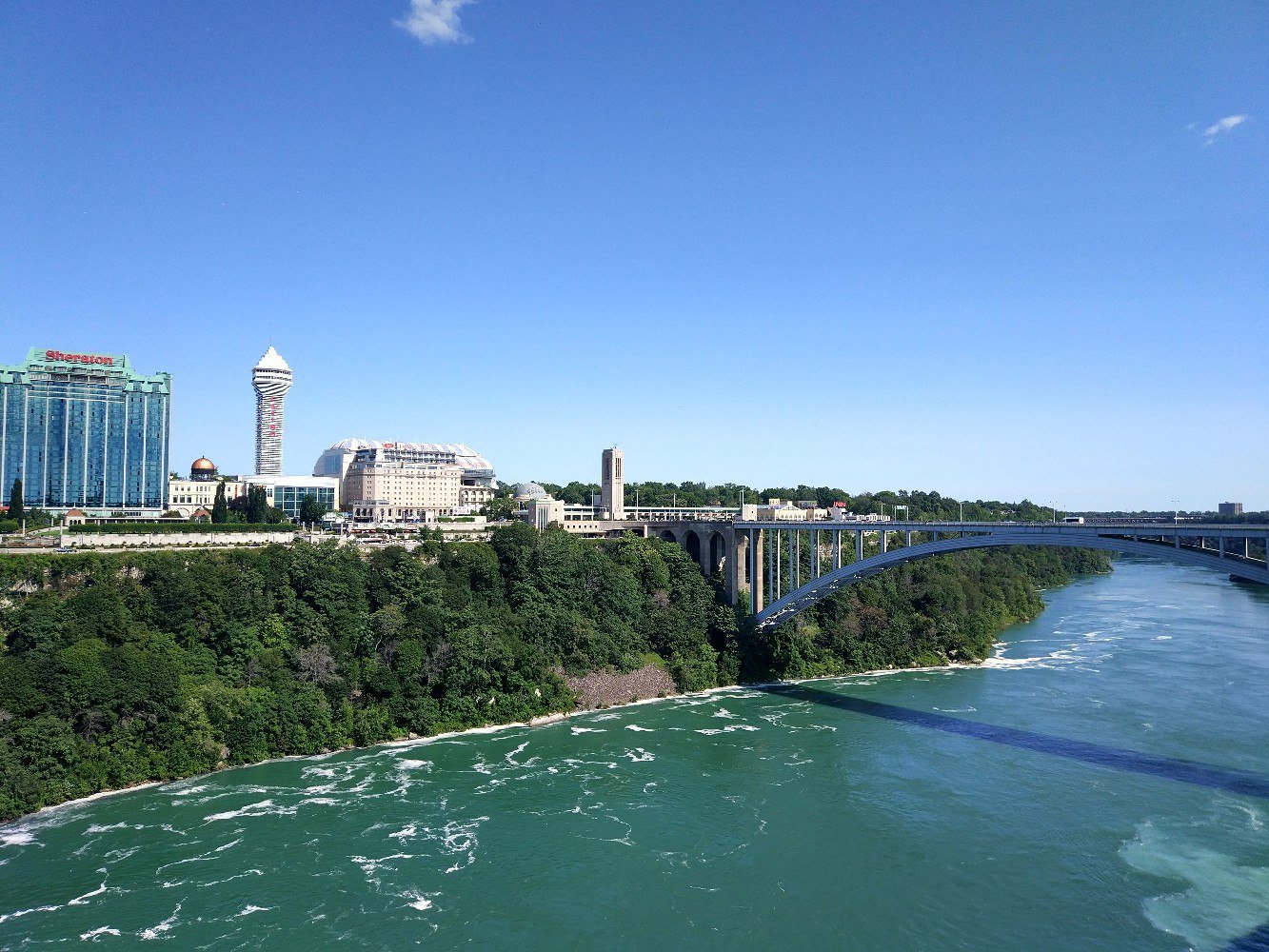
Niagara Falls: by night, by day, and eleven thousand years ago
In August 2017 we were driving east through Cleveland. For two days it rained there and was overcast. From Cleveland we drove to Niagara Falls and soon were already in New York — not the city, though, but the state.
Flea markets along the way
Flea markets in America really are cool. At the start of the trip we stopped at them often: you can find loads of stuff there at a good price. In 2017 we found at flea markets a great travel mug for $2, shorts for Pavel for 4, and a fridge — a special ice chest — for 6. Now, though, in almost every town we went into TJ Maxx: it sells designer goods at low prices.
Once again we hadn't found a host for the night, so we planned to sleep in a Walmart parking lot.
The falls at night
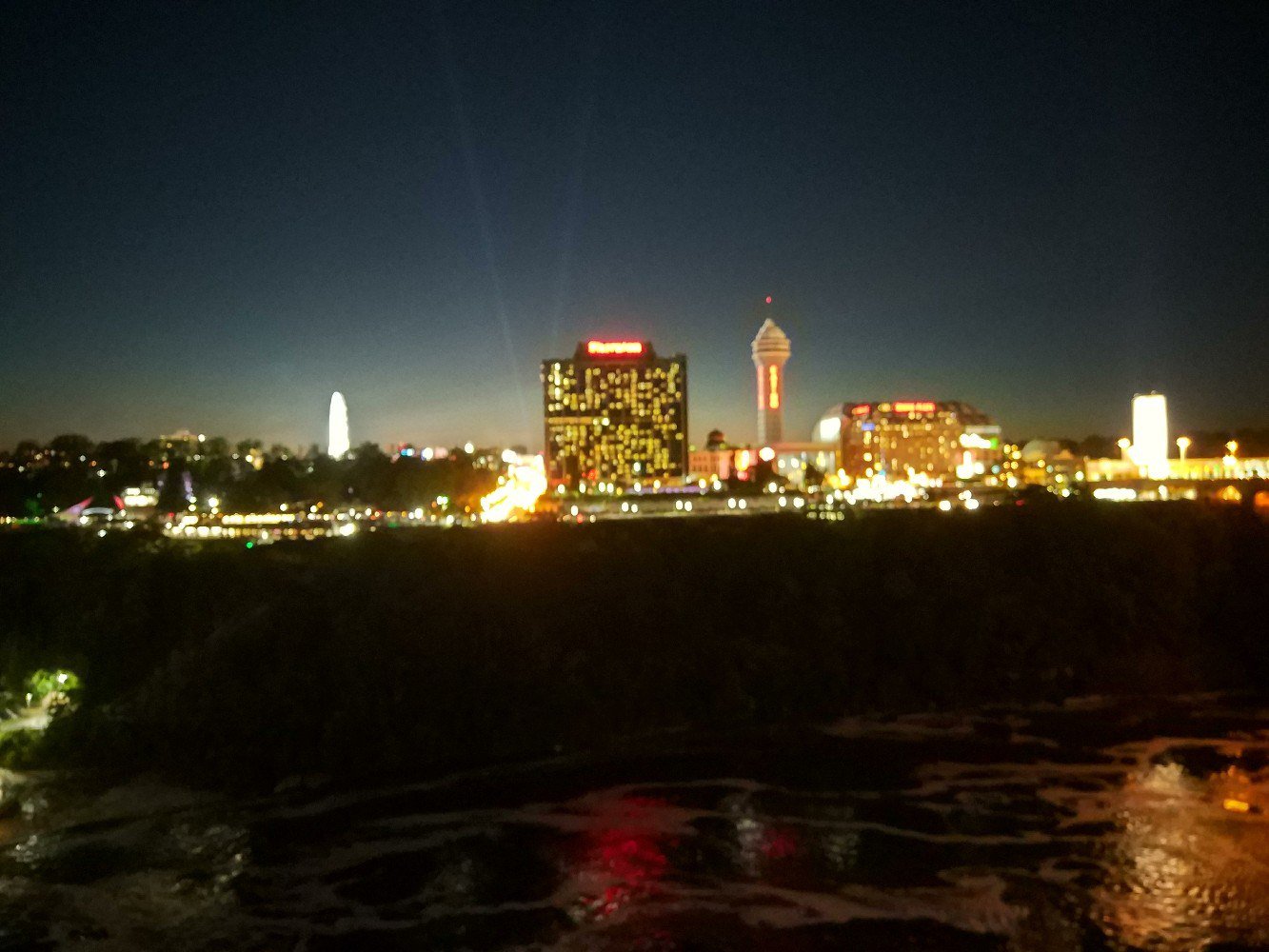
Late in the evening we were at the falls and sent our family a night photo — a kind of live broadcast. We left the car at a casino while we took in the falls.
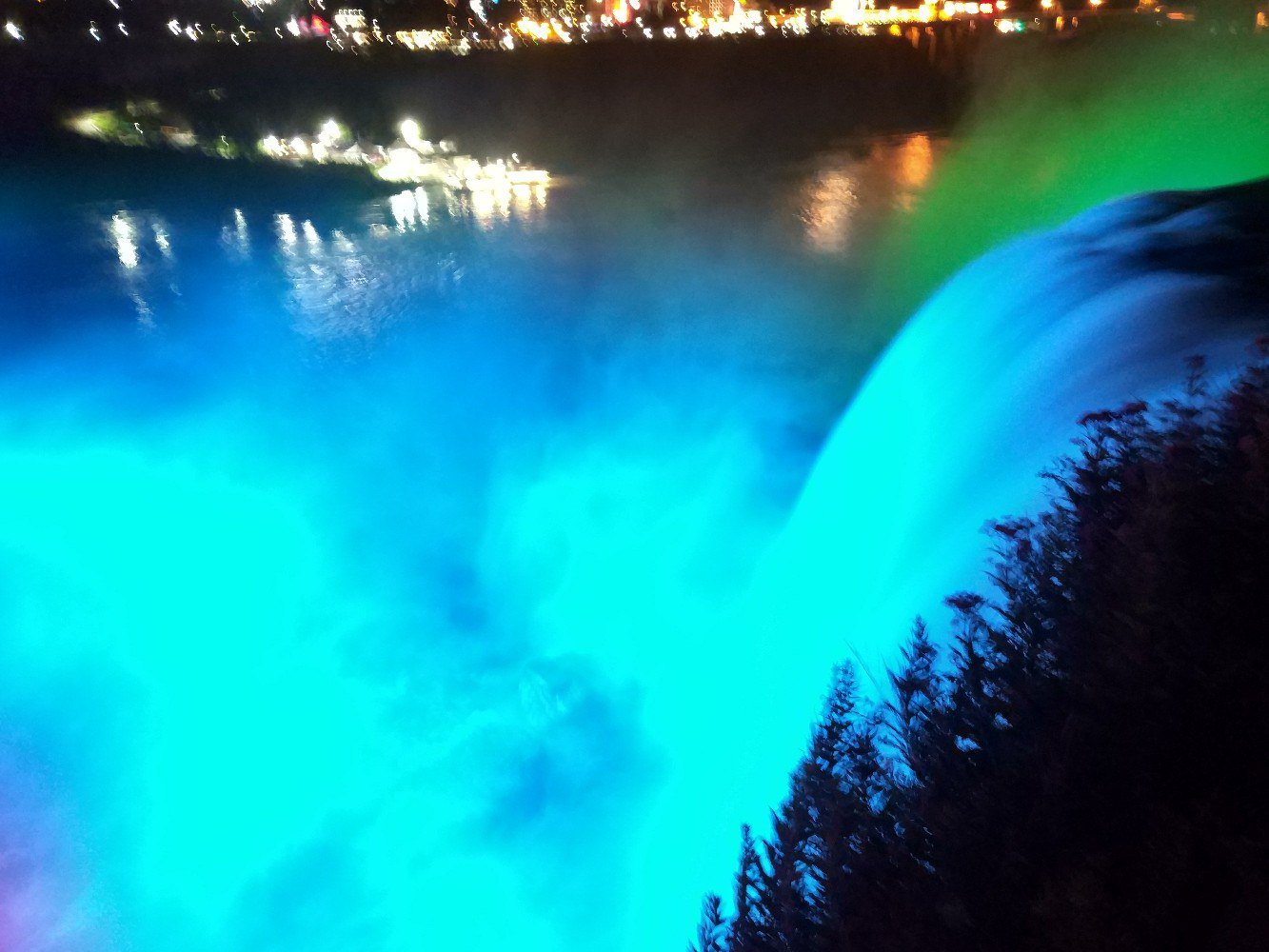
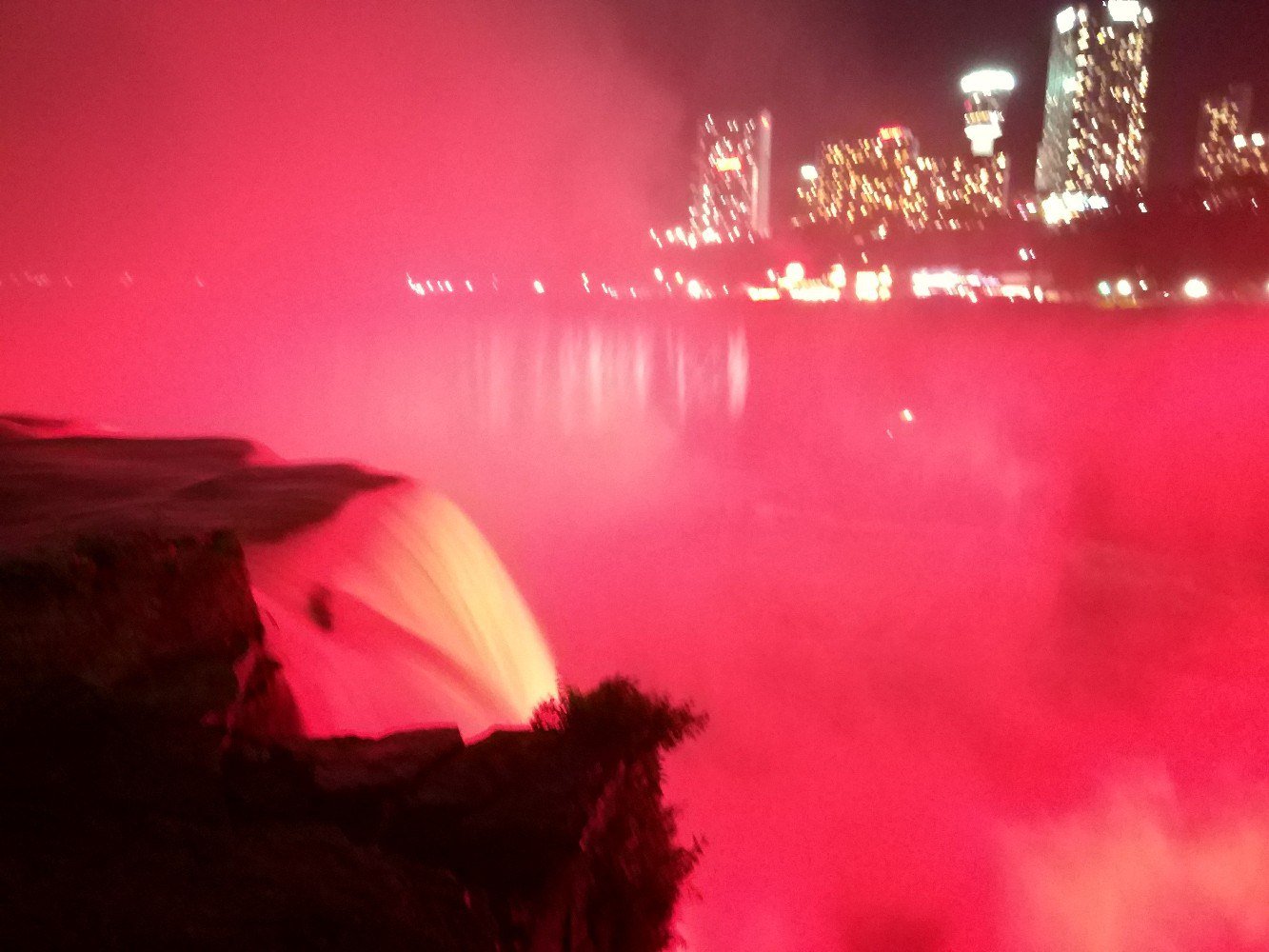
The city in the background is already Canada.
In all their glory
The next day we saw Niagara Falls in all their glory. Americans, by the way, pronounce the name as “Nye-AG-ruh Falls.” Canada is over there, on the other shore.
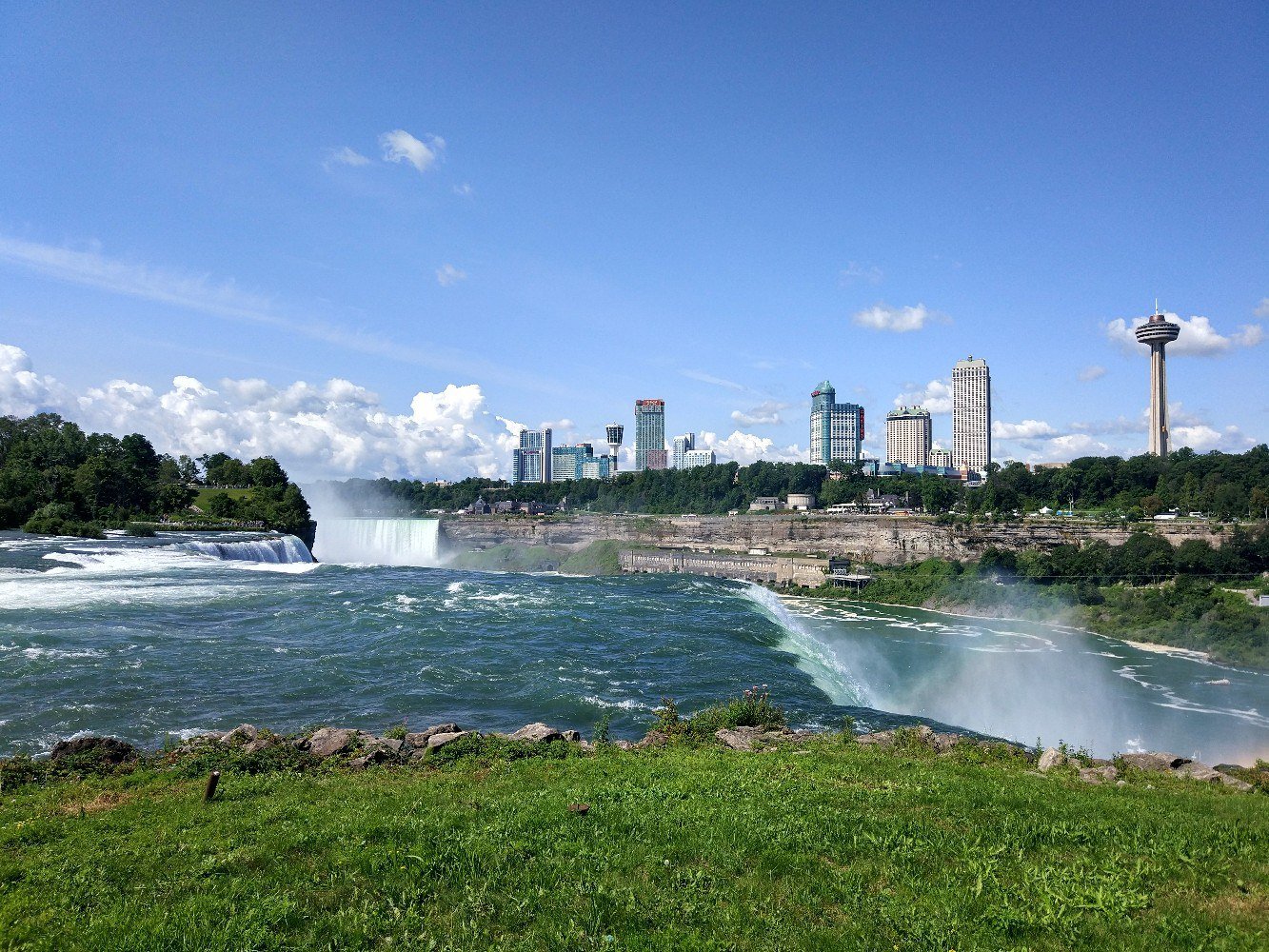
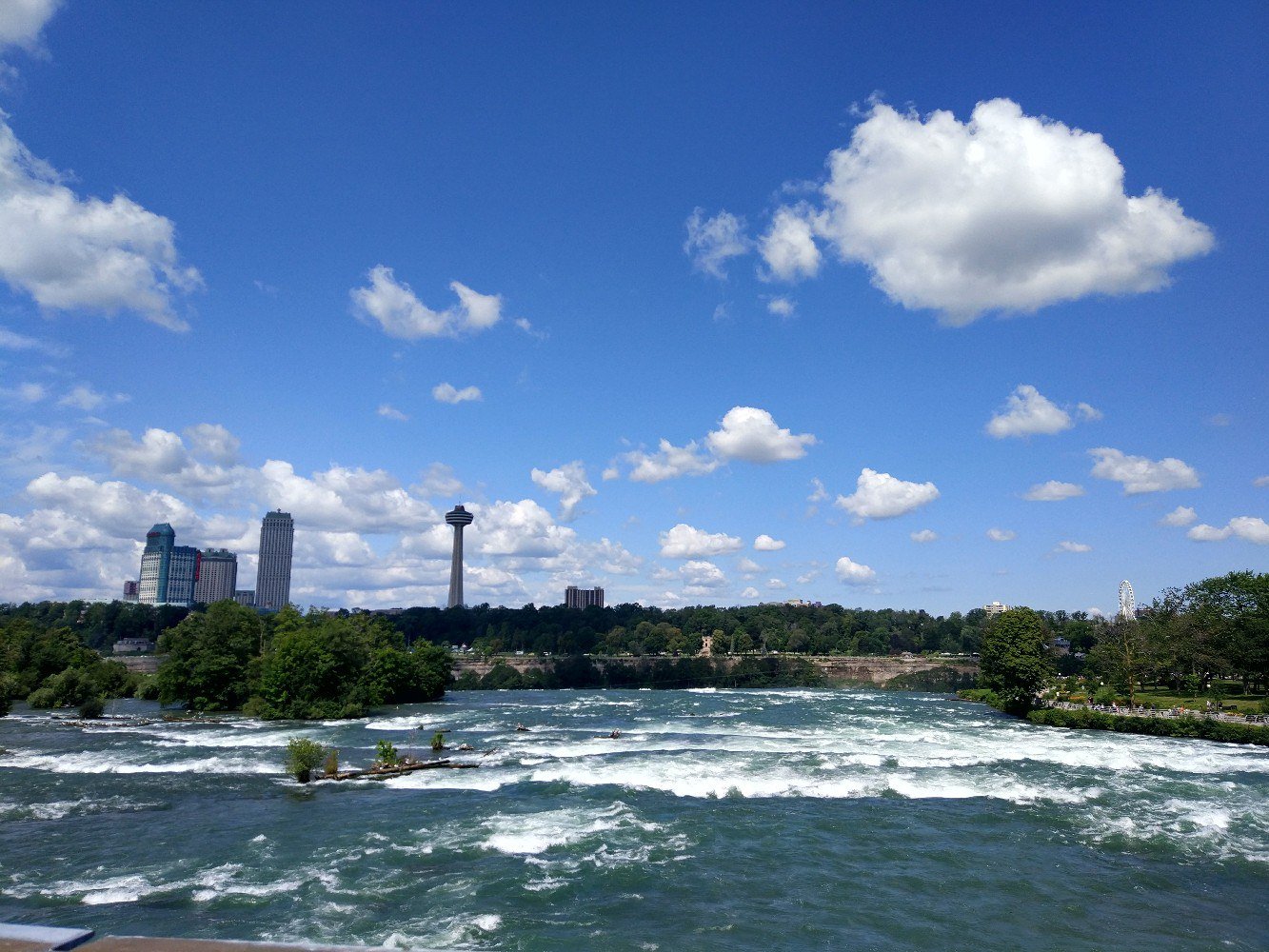
Niagara Falls is actually three waterfalls. The first is the American Falls.
The second is Bridal Veil Falls. It's hard to photograph; we only managed to get a small piece of it.
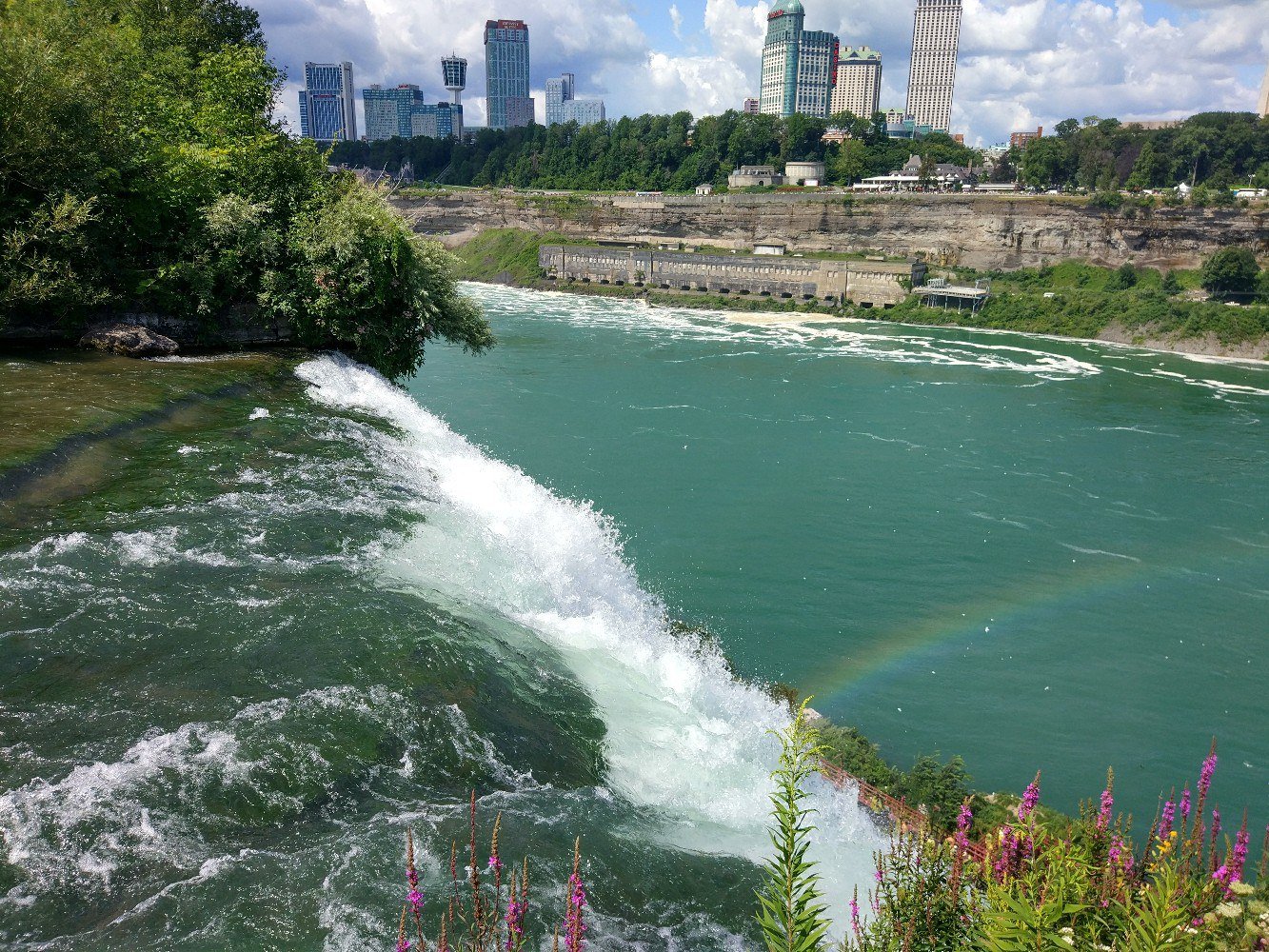
And the third, the biggest and most powerful, is Horseshoe Falls.
The falls are moving south
Wikipedia says that because of erosion these falls are moving south. About 11 thousand years ago the falls were near Lewiston on the American side and Queenston on the Canadian side. Now they are receding about 30 centimeters a year, while earlier they moved back a meter to a meter and a half: this movement is being slowed by reinforcing the rock.
During the day we were still in the city of Niagara Falls, but we were already getting ready to drive on — toward Rochester, and maybe farther.
Comments
Thank you! Your comment has been sent and will appear after moderation.