Berlin and Dresden: a crayfish in the park, a bridge in the Elbe, and rocks on the way to Prague
On September 17, 2024, we arrived in Berlin and checked in for two days.
A day in central Berlin
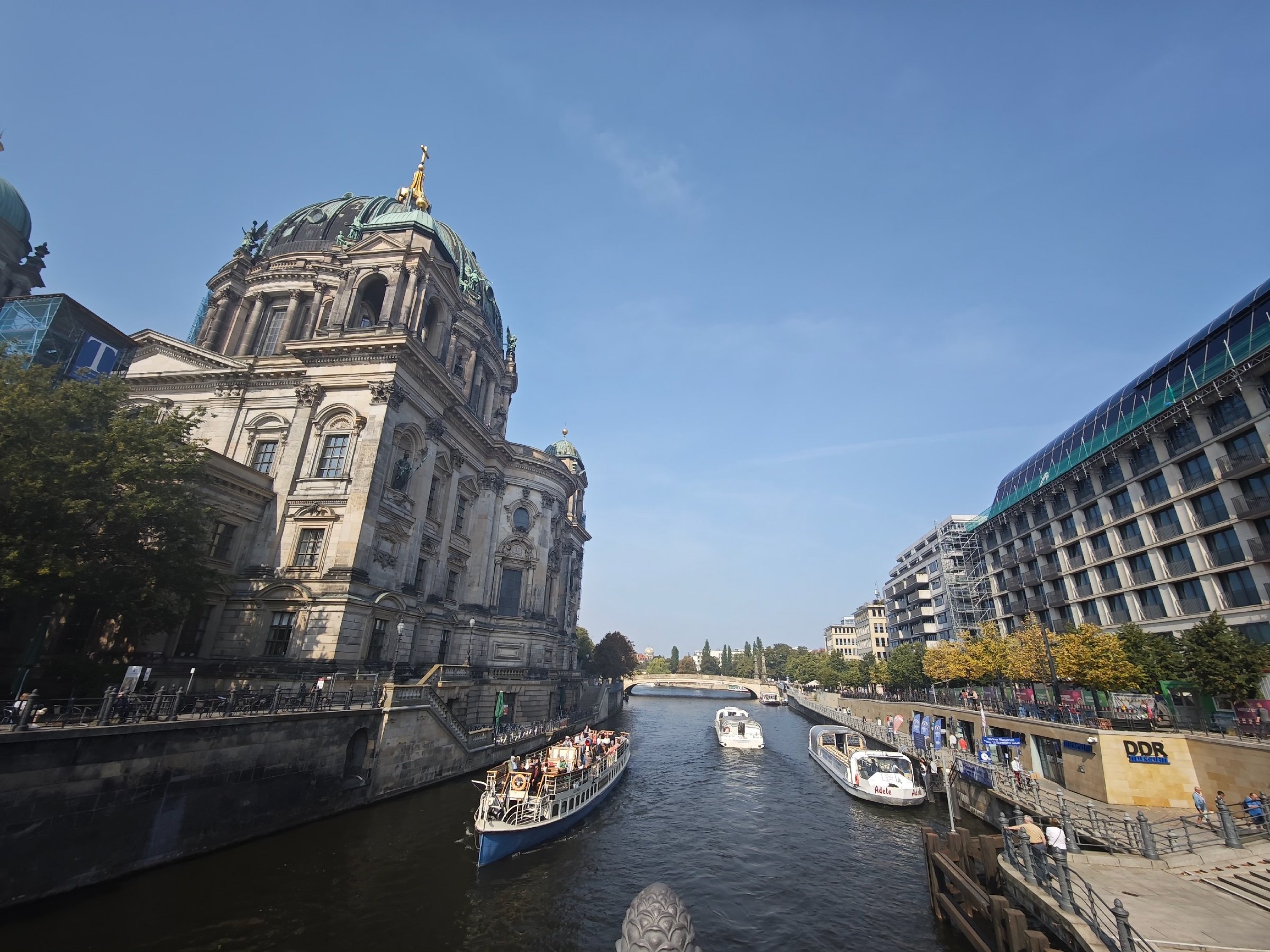
The next day we walked around the center. One of our stops was the Lustgarten park. If you look closely, there is a large granite bowl in front of the Altes Museum, almost seven meters across. It is called a wonder of the world of the Biedermeier era: it is the largest bowl carved from a single piece of stone.
St. Mary's Church looks more impressive from the outside than inside, but inside we found a digital cross. Berlin Cathedral is the largest Protestant church in Germany.
Leia quickly fell sound asleep in the stroller.
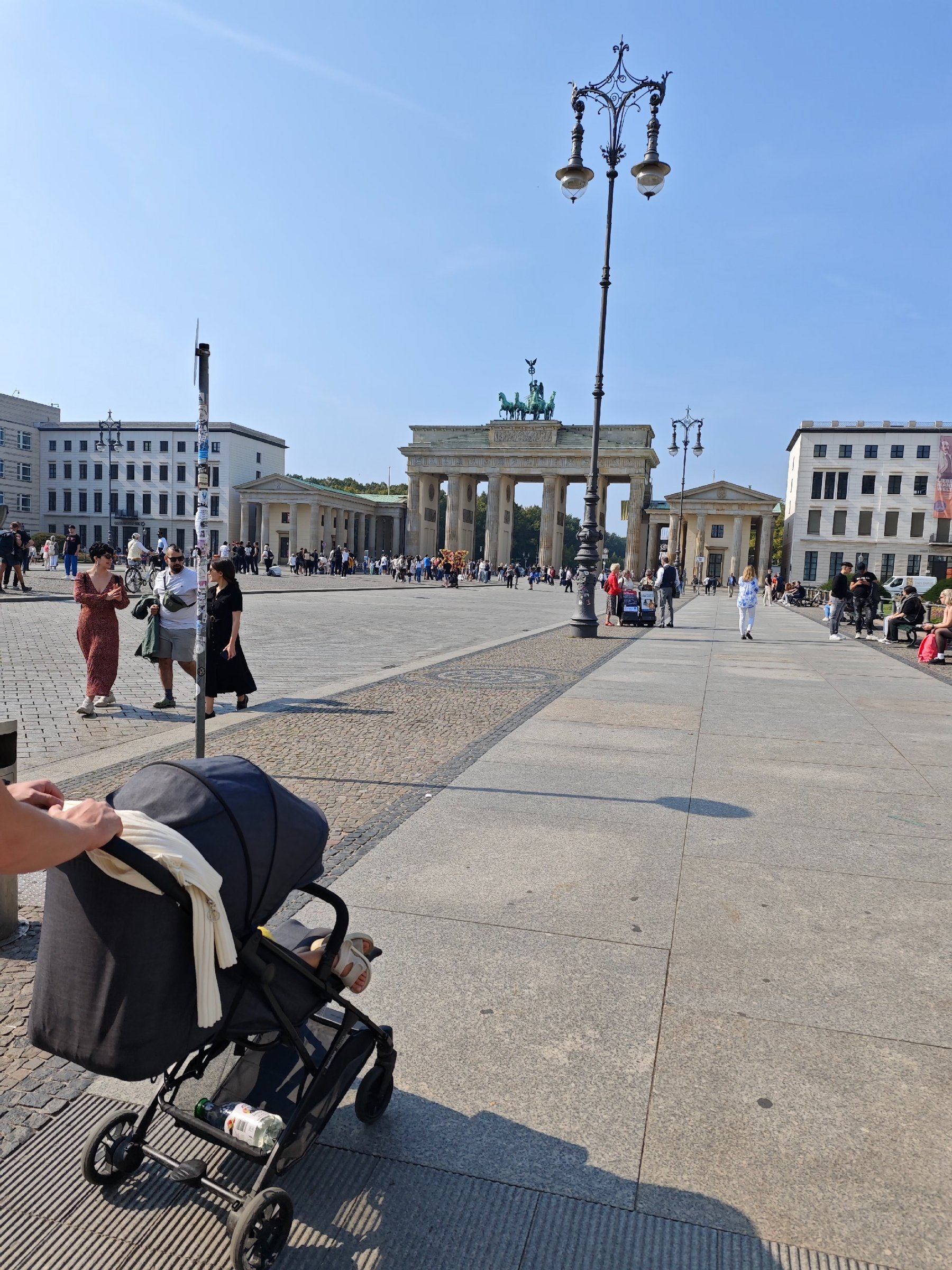
We headed to the Reichstag hoping to go up to the top, but all the tickets for that day were already sold out.
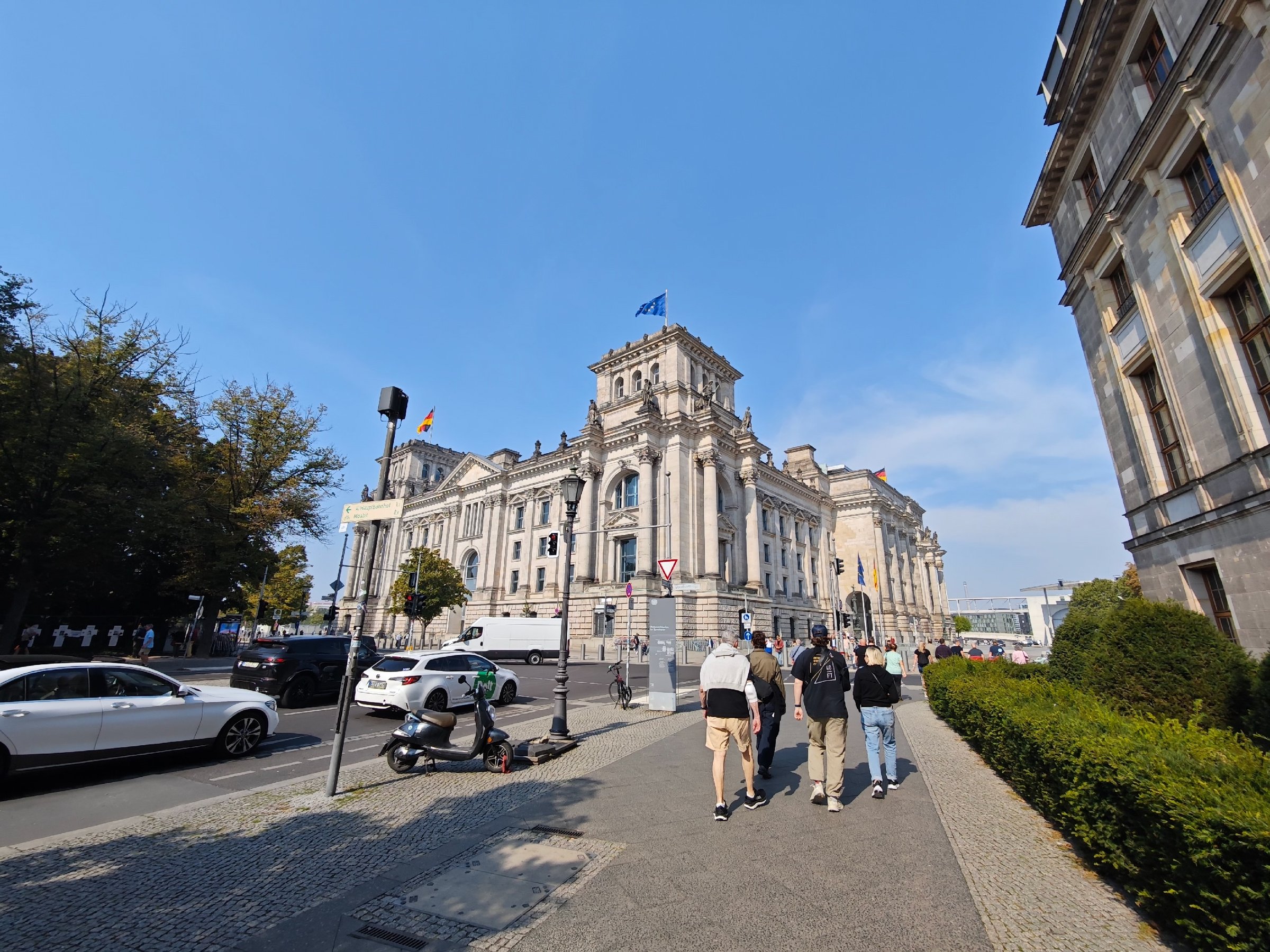
We looked at Bellevue Palace, the residence of the president of Germany, and walked around the park.
A crayfish on the path
While we were making our way through the park, a little crayfish crossed our path.
A memorial and a gallery church
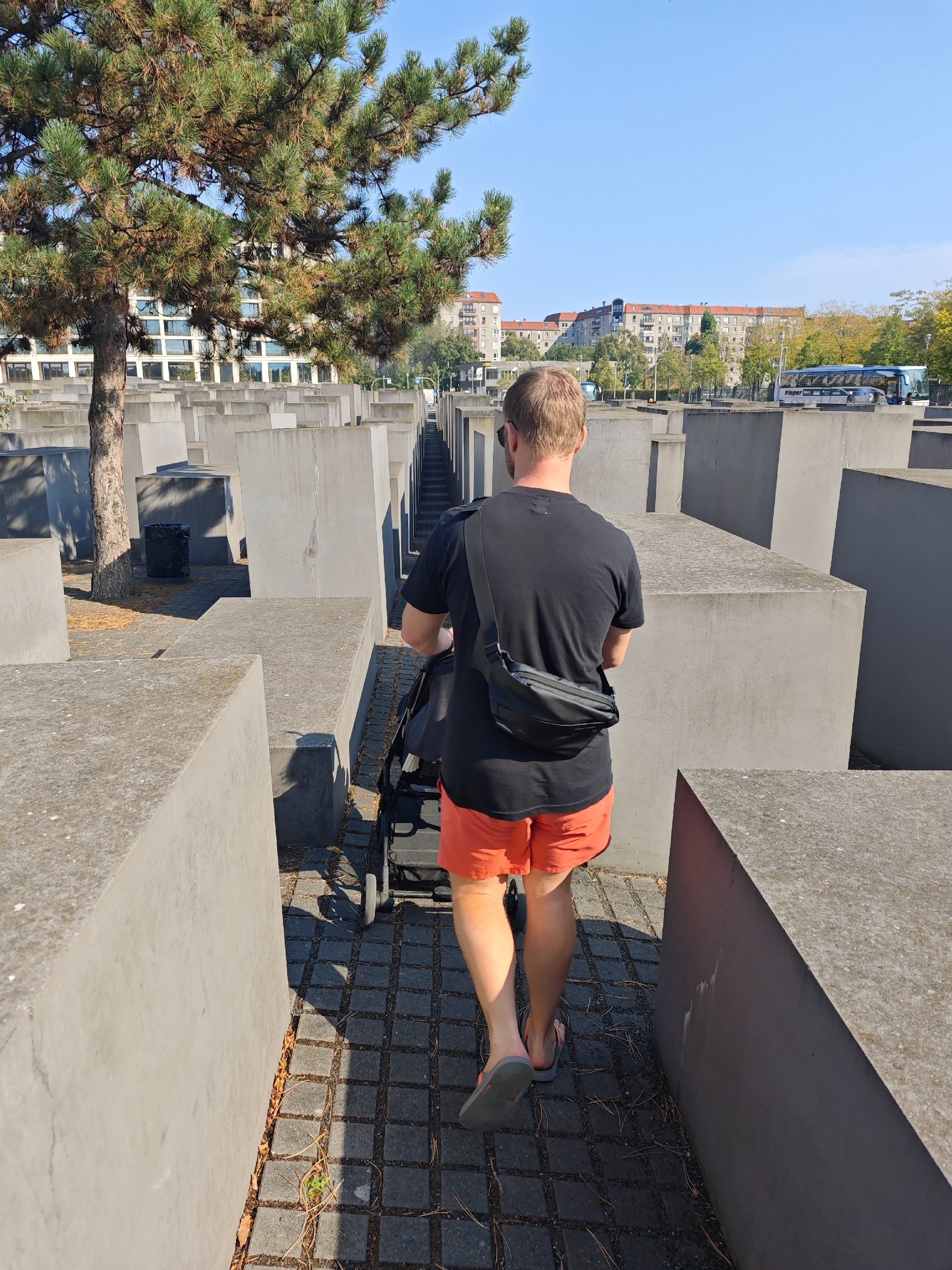
The Holocaust Memorial is a field of 2711 concrete slabs set in rows on uneven ground. Long narrow passages run between them, and the ground in them rises and falls.
We went into the Friedrichswerder Church: in September 2024 it hosted a National Gallery exhibition of nineteenth-century German sculpture.
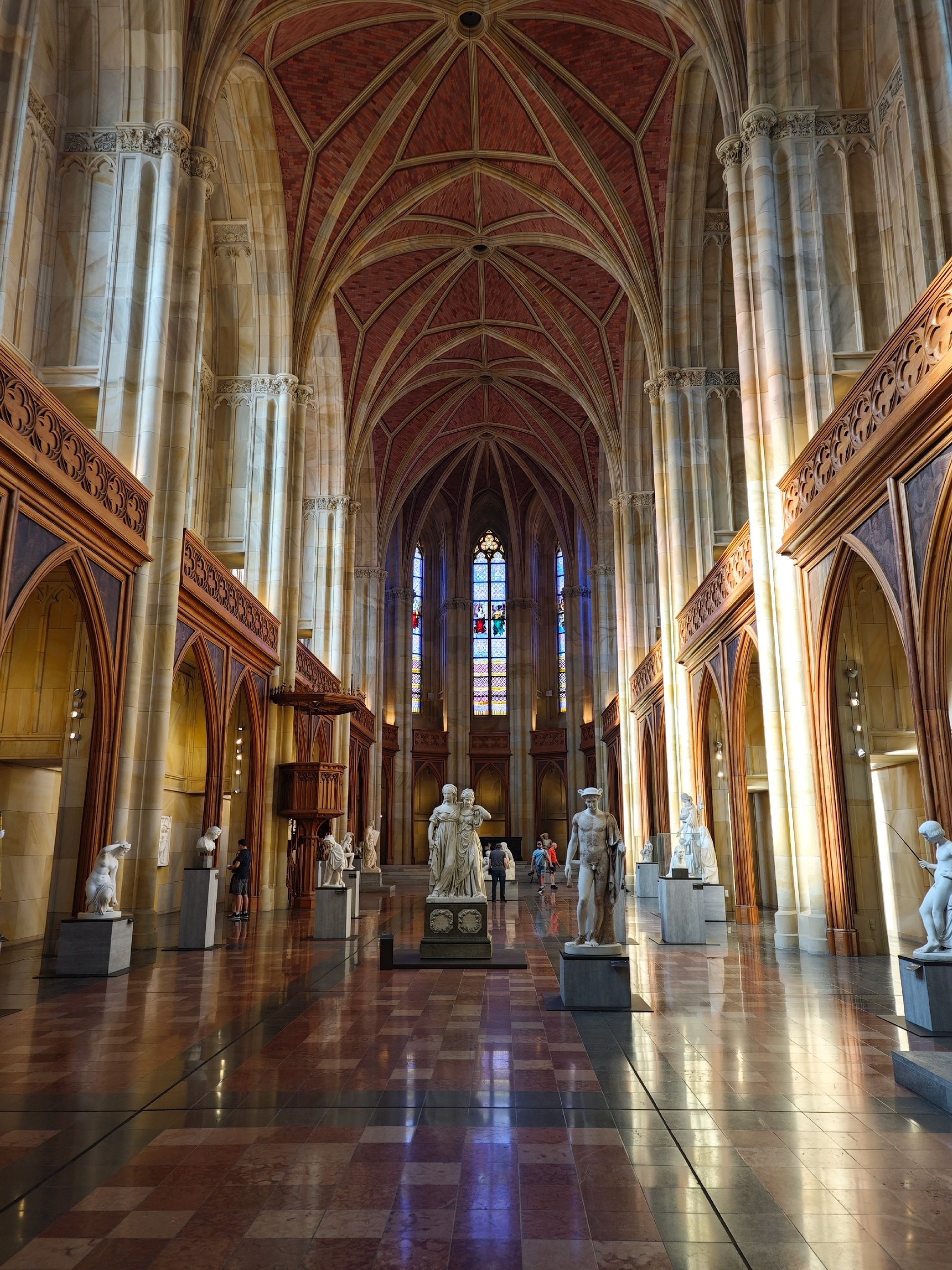
We took the tram back to the hotel.
Dresden after the flood
On September 19, we moved to Dresden and checked into a hotel for a couple of days. On the first day we only went to IKEA to eat, and went out to explore the city later.
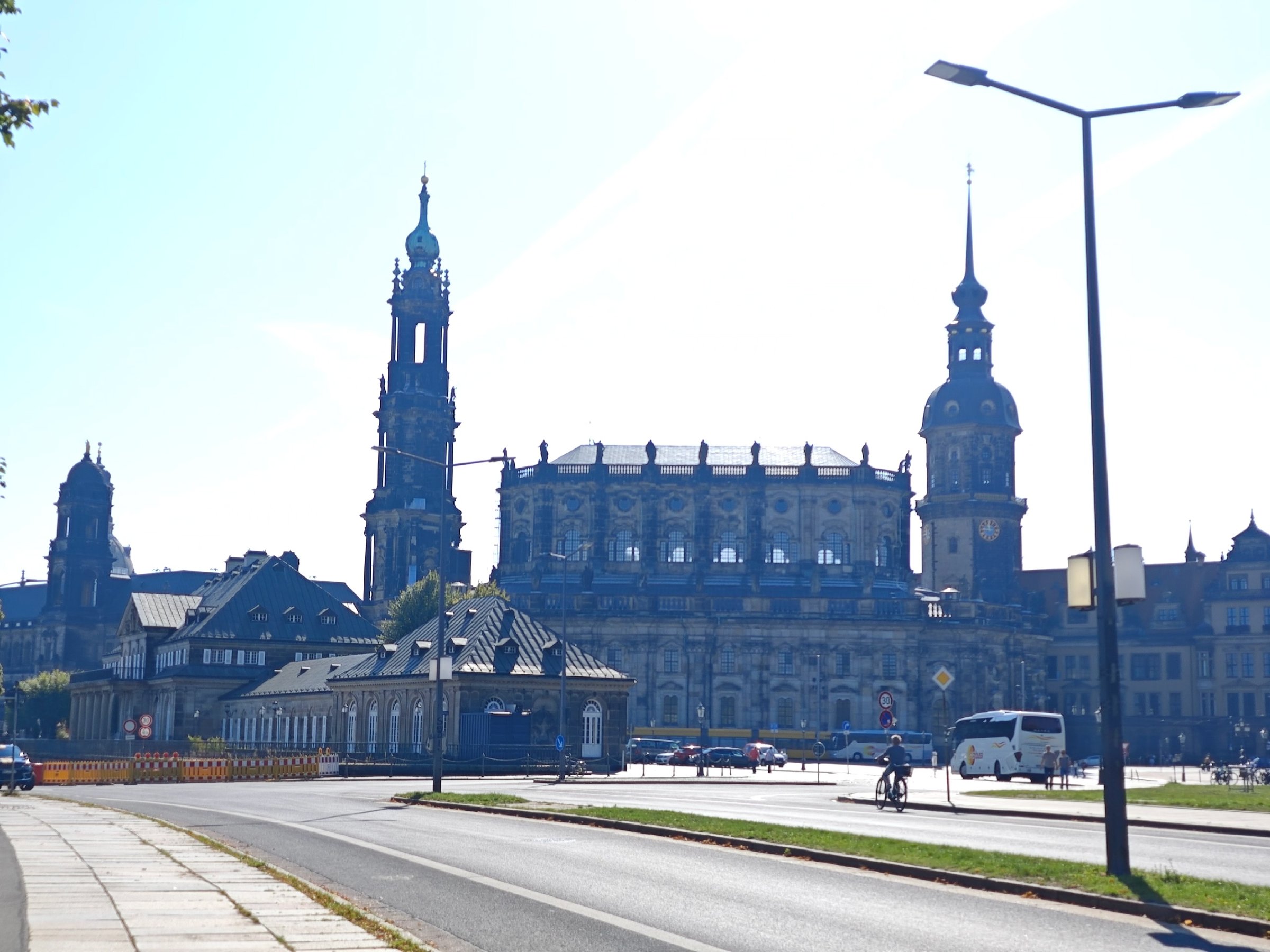
On the Elbe you could see what the September flood in Central Europe had done: the river had overflowed its banks. And the Carola Bridge stood wrecked: part of the bridge (the tram section) had collapsed into the Elbe on September 11, before the flood.
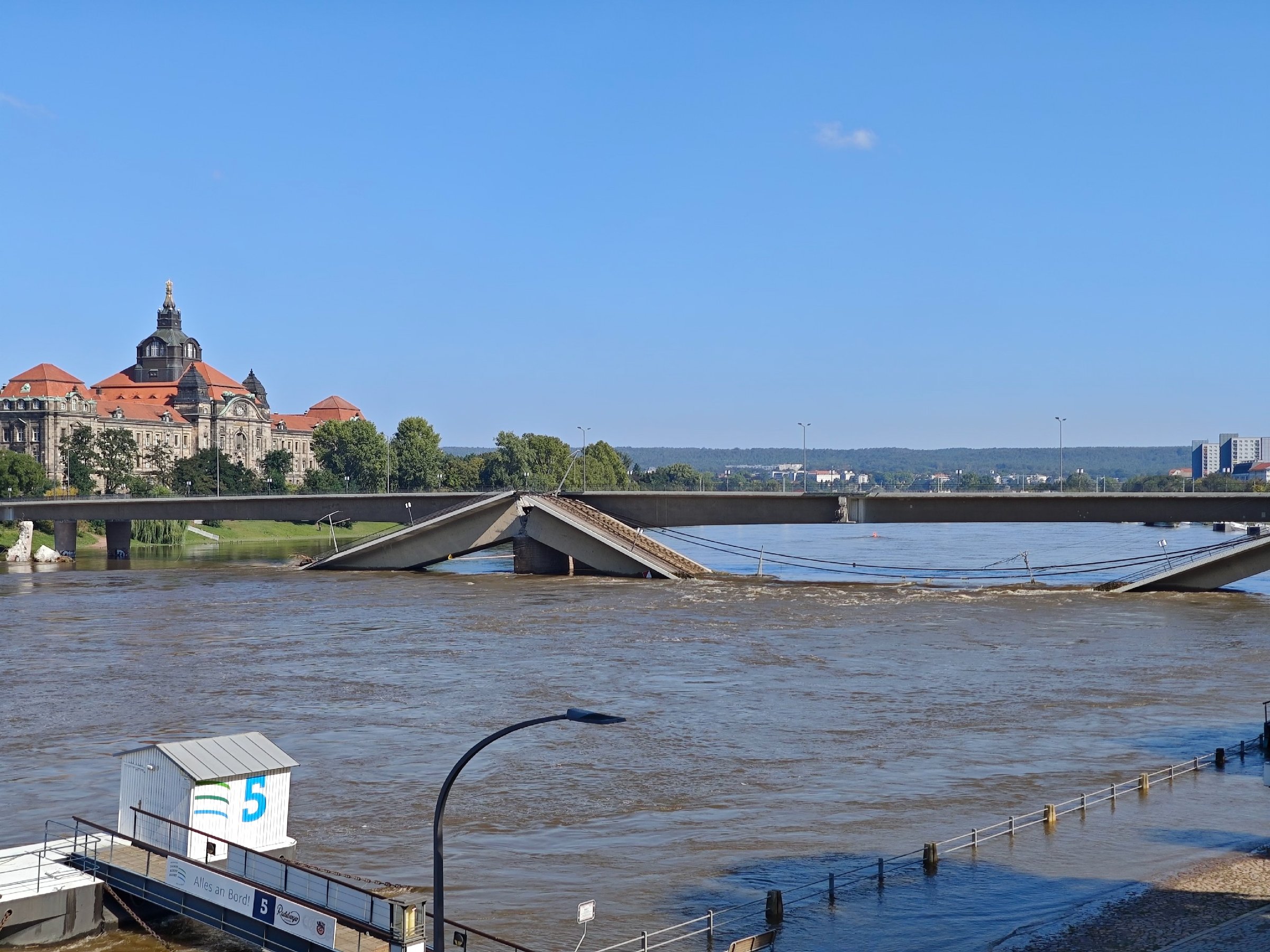
Pavel and Leia on the parapet.
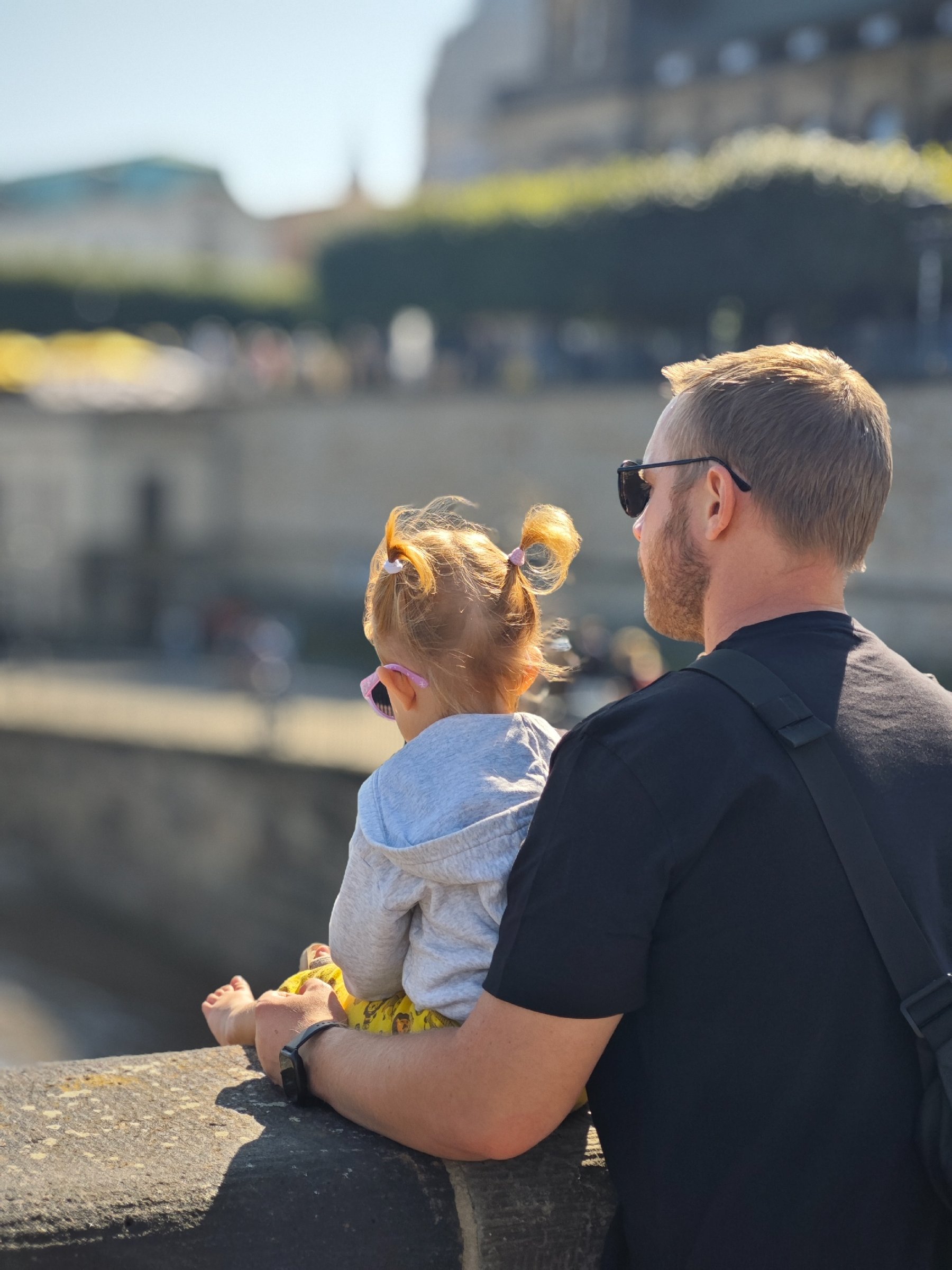
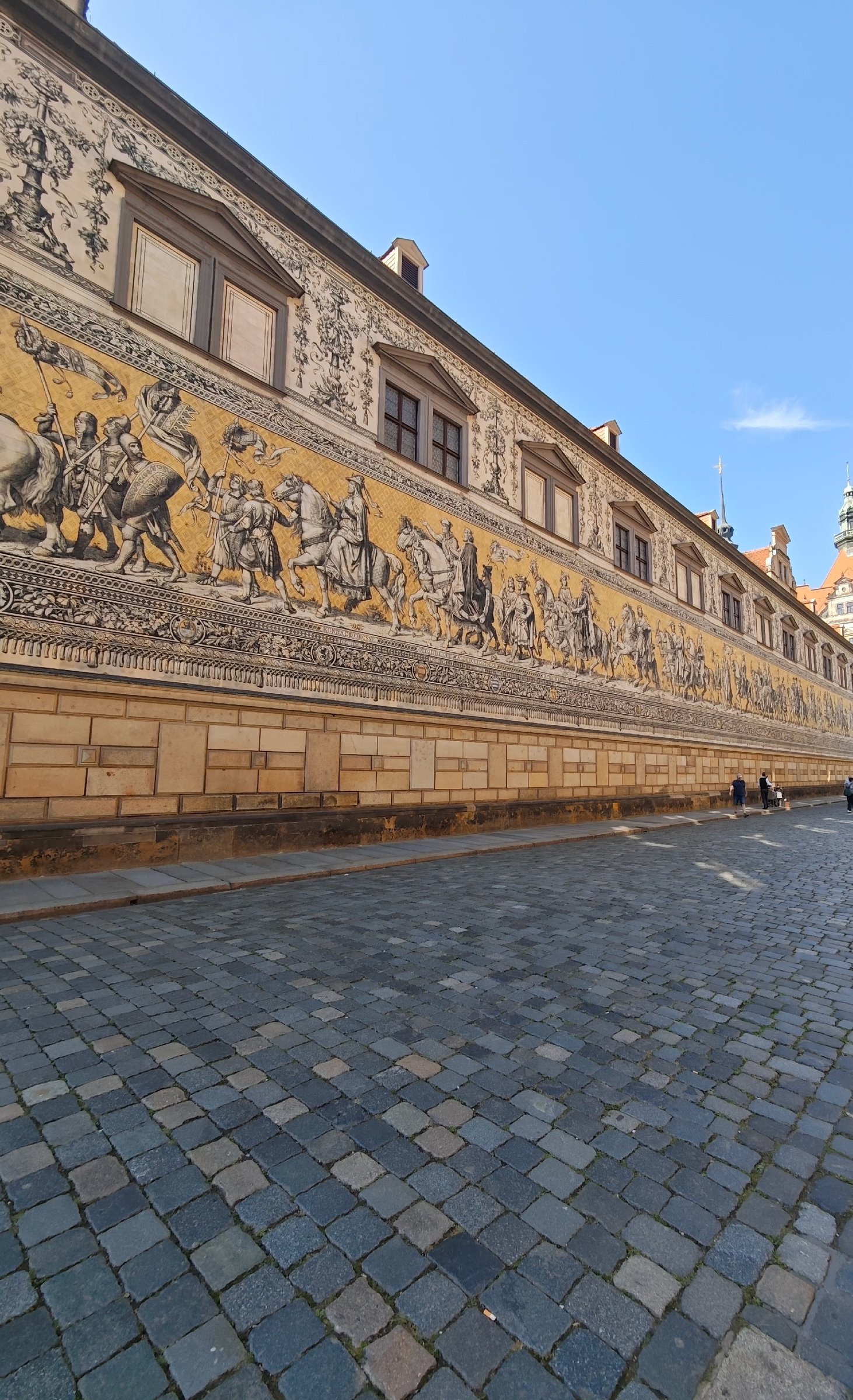
We saw a long wall with the rulers of Saxony laid out on it, the “Procession of Princes.” The mounted procession stretches for 102 meters and is made of about 23,000 Meissen porcelain tiles.
We also spotted two retired ladies sitting at a street café with Aperol spritzes. To me, a scene like that is what Europe is.
Tiské stěny on the way to Prague
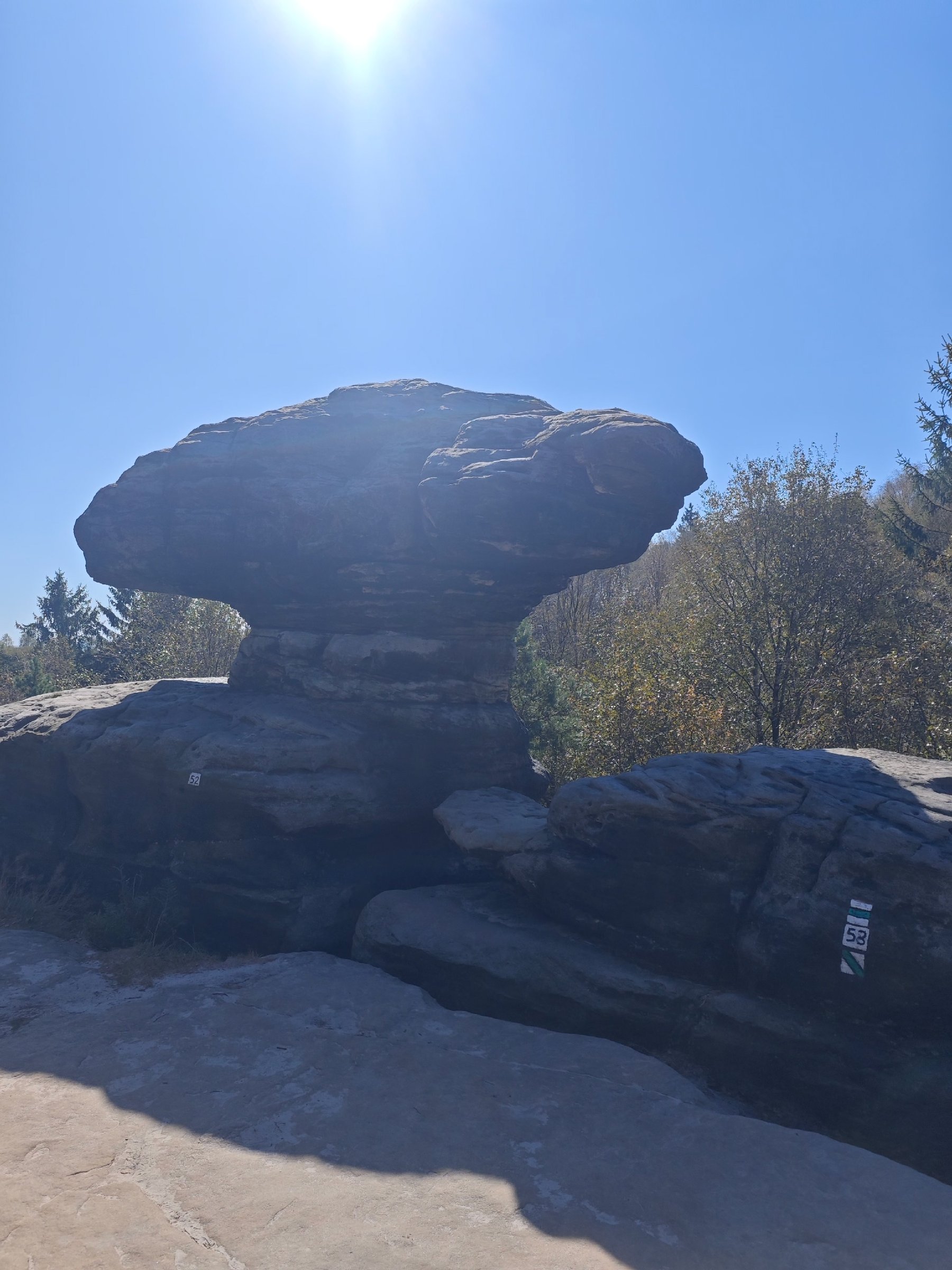
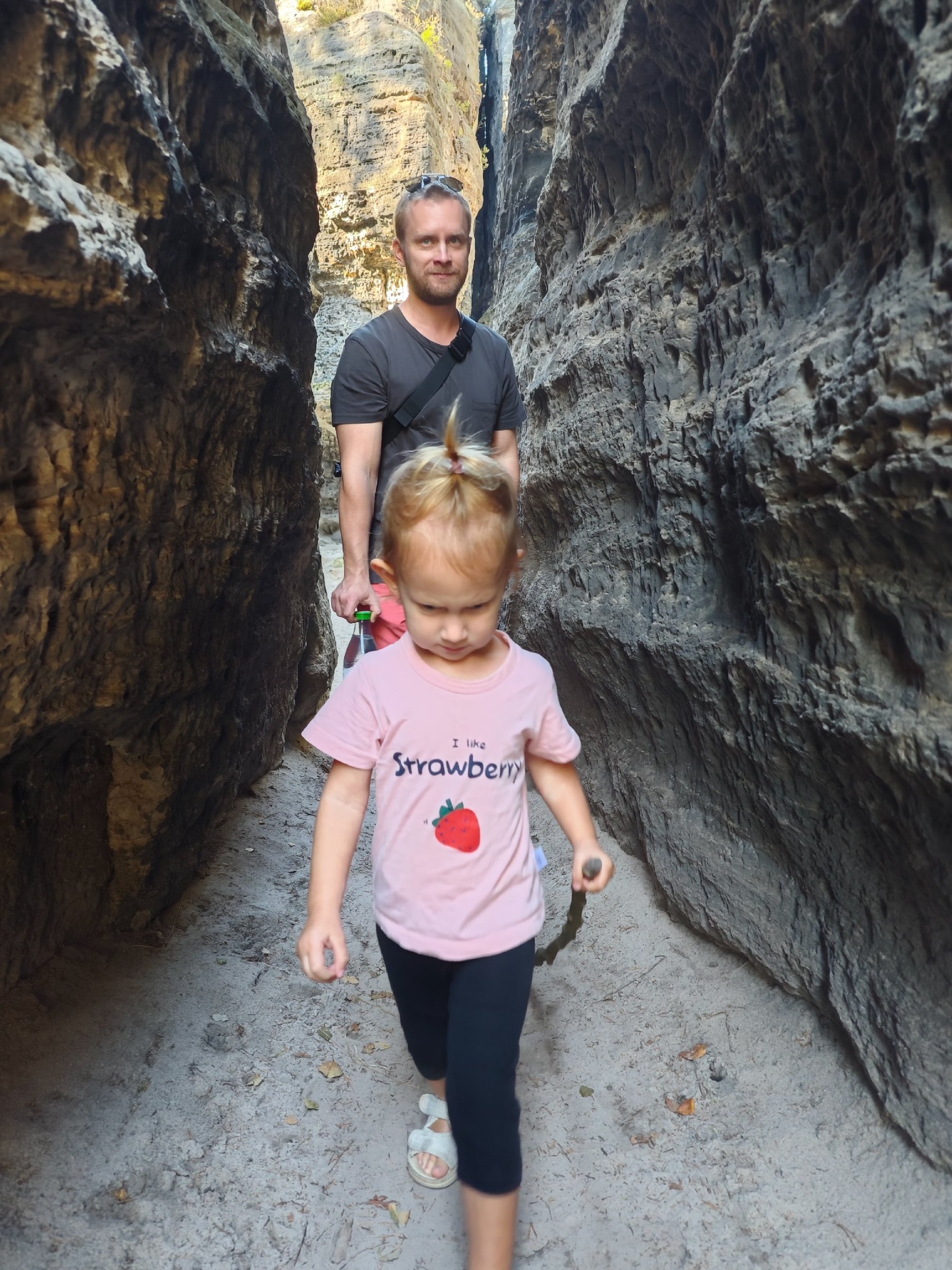
On September 21, we went on to Prague. On the way, already in the Czech Republic, we stopped at an interesting place, Tiské stěny. It is a sandstone rock town near the village of Tisá, not far from the Prague–Dresden highway. The rocks there are flat, and we walked around among them.

By evening we were already in Prague.
Comments
Thank you! Your comment has been sent and will appear after moderation.